The automotive landscape in 2026 is more exciting and complex than ever before. With the rapid advancement of electric vehicles (EVs), hybrid technology, connected car features, and evolving safety standards, buying a new car requires careful research and strategic planning.
Whether you're a first-time buyer or upgrading your existing vehicle, this comprehensive guide will walk you through everything you need to know to make the smartest car purchase in 2026. From choosing between petrol, diesel, hybrid, or electric, to understanding financing options and negotiating the best deal — we've got you covered.
1. Understanding the 2026 Automotive Landscape
The Indian automotive market in 2026 presents unique opportunities and challenges:
Key Market Trends
- EV Revolution: Electric vehicles now represent over 15% of new car sales in India
- Advanced Safety Features: ADAS (Advanced Driver Assistance Systems) becoming standard
- Connected Car Tech: 5G connectivity, OTA updates, and smart features
- Stricter Emission Norms: BS7 norms coming into effect
- Subscription Models: New ownership alternatives emerging
Why 2026 is a Great Time to Buy
- More EV options at competitive prices
- Better financing schemes and government incentives
- Improved charging infrastructure across major cities
- Higher resale value retention for modern tech-equipped cars
- Better warranty and service packages from manufacturers
2. Step 1: Define Your Budget Realistically
The most critical first step in buying a car is establishing a clear, realistic budget.
Calculate Your Total Cost of Ownership
Don't just look at the sticker price. Consider:
Initial Costs:
- Ex-showroom price
- Road tax and registration (8-12% of car price)
- Insurance (3-5% of car value annually)
- Extended warranty (optional, ?15,000-?50,000)
- Accessories and modifications
Ongoing Costs:
- Monthly EMI (if financed)
- Fuel costs (?3,000-?15,000/month depending on usage)
- Maintenance (?5,000-?20,000 annually)
- Parking charges
- Toll expenses
The 20/4/10 Rule
Financial experts recommend:
- 20% down payment minimum
- 4 years maximum loan tenure
- 10% or less of monthly income toward EMI
Example:If your monthly income is ?60,000:
- Maximum EMI: ?6,000
- At 9% interest for 4 years, you can afford a car worth approximately ?7.5-8 lakhs (after down payment)
Budget Categories for 2026
| Budget Range | Car Segment | Examples |
|---|---|---|
| ?5-8 Lakhs | Entry Hatchback | Maruti Alto K10, Tata Tiago, Hyundai Exter |
| ?8-12 Lakhs | Premium Hatchback/Compact Sedan | Maruti Baleno, Hyundai i20, Tata Altroz |
| ?12-18 Lakhs | Compact SUV | Hyundai Venue, Kia Sonet, Tata Nexon |
| ?18-25 Lakhs | Mid-Size SUV | Hyundai Creta, Kia Seltos, MG Astor |
| ?25-40 Lakhs | Premium SUV | Hyundai Alcazar, MG Hector Plus |
| ?40+ Lakhs | Luxury Segment | BMW X1, Mercedes GLA, Audi Q3 |
3. Step 2: Choose Your Fuel Type Wisely
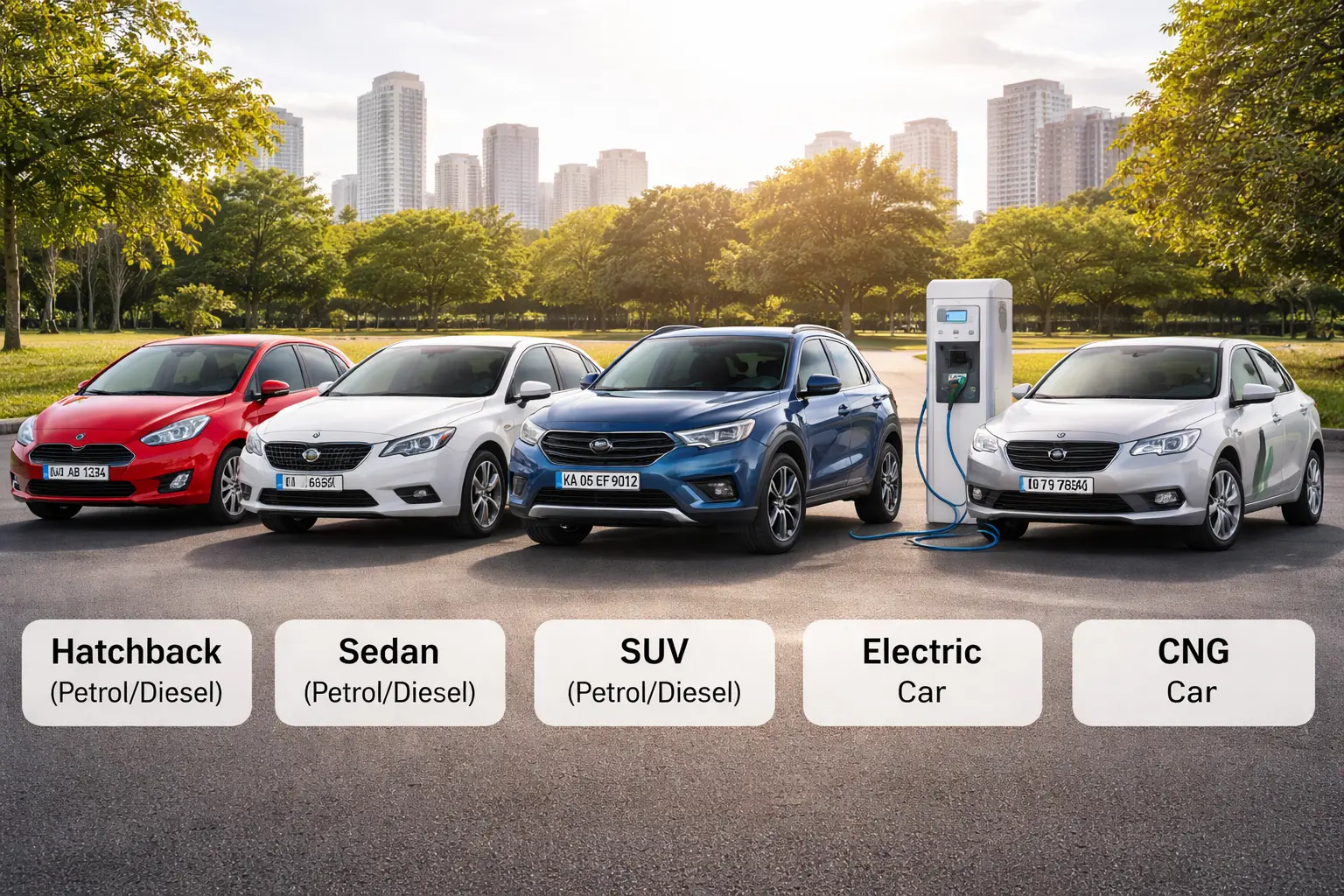
2026 offers more powertrain options than ever. Each has distinct advantages:
Petrol Cars
Advantages:
- Lower initial cost
- Quieter engine operation
- Better refinement
- Lower maintenance costs
- Widely available fuel network
Best For:
- City driving (under 1,000 km/month)
- Smoother driving experience preference
- Lower upfront budget
Popular Models:
- Maruti Suzuki Swift, Baleno
- Hyundai i20, Venue
- Tata Altroz
Diesel Cars
Advantages:
- Better fuel efficiency (20-30% more than petrol)
- Higher torque for highway driving
- Better for long-distance travel
- Strong resale value for SUVs
Disadvantages:
- Higher purchase price (?1-2 lakhs more)
- Higher maintenance costs
- Future resale concerns due to environmental policies
Best For:
- Monthly driving over 2,000 km
- Highway commuters
- Commercial use
Break-Even Point:Diesel becomes cost-effective after driving approximately 80,000-100,000 km
CNG Cars
Advantages:
- Lowest running cost (?2-2.5/km)
- Cleaner emissions
- Government incentives in some states
- Lower road tax
Disadvantages:
- Reduced boot space (cylinder placement)
- Slightly lower performance
- Limited CNG stations outside major cities
- Higher maintenance of CNG kit
Best For:
- High daily commute within city limits
- Uber/Ola drivers
- Cost-conscious buyers
Popular Models:
- Maruti WagonR, Ertiga CNG
- Hyundai Grand i10 Nios CNG
- Tata Tiago CNG
Hybrid Cars
Advantages:
- Excellent fuel efficiency (25-30 km/l)
- Lower emissions
- No charging infrastructure needed
- Smooth power delivery
- Tax benefits in some states
Disadvantages:
- Higher initial cost
- Limited model availability
- Expensive battery replacement (after 8-10 years)
Best For:
- Environmentally conscious buyers
- City + highway mix driving
- Premium segment buyers
Popular Models:
- Maruti Grand Vitara Strong Hybrid
- Toyota Urban Cruiser Hyryder
- Honda City e:HEV
Electric Vehicles (EVs)
Advantages:
- Lowest running cost (?1-1.5/km)
- Zero emissions
- Instant torque, smooth acceleration
- Lower maintenance (no engine oil, fewer moving parts)
- Government subsidies (FAME III)
- Premium features at lower price points
Disadvantages:
- Higher initial investment
- Range anxiety (200-500 km range)
- Charging time (30 min-8 hours)
- Limited charging infrastructure
- Battery degradation over time
- Lower resale value uncertainty
Best For:
- City driving with home charging facility
- Daily commute under 100 km
- Tech-savvy early adopters
- Access to workplace charging
Popular Models:
- Tata Nexon EV, Punch EV
- MG ZS EV, Comet EV
- BYD Atto 3
- Hyundai Ioniq 5
2026 Recommendation by Use Case
| Use Case | Best Fuel Type | Second Best |
|---|---|---|
| City only (< 1000 km/month) | Petrol / EV | CNG |
| City + Highway mix | Strong Hybrid | Petrol |
| Highway heavy (> 2000 km/month) | Diesel | Petrol |
| Daily commute (< 50 km) | EV | CNG |
| Commercial use | CNG / Diesel | Diesel |
4. Step 3: Identify Your Car Requirements
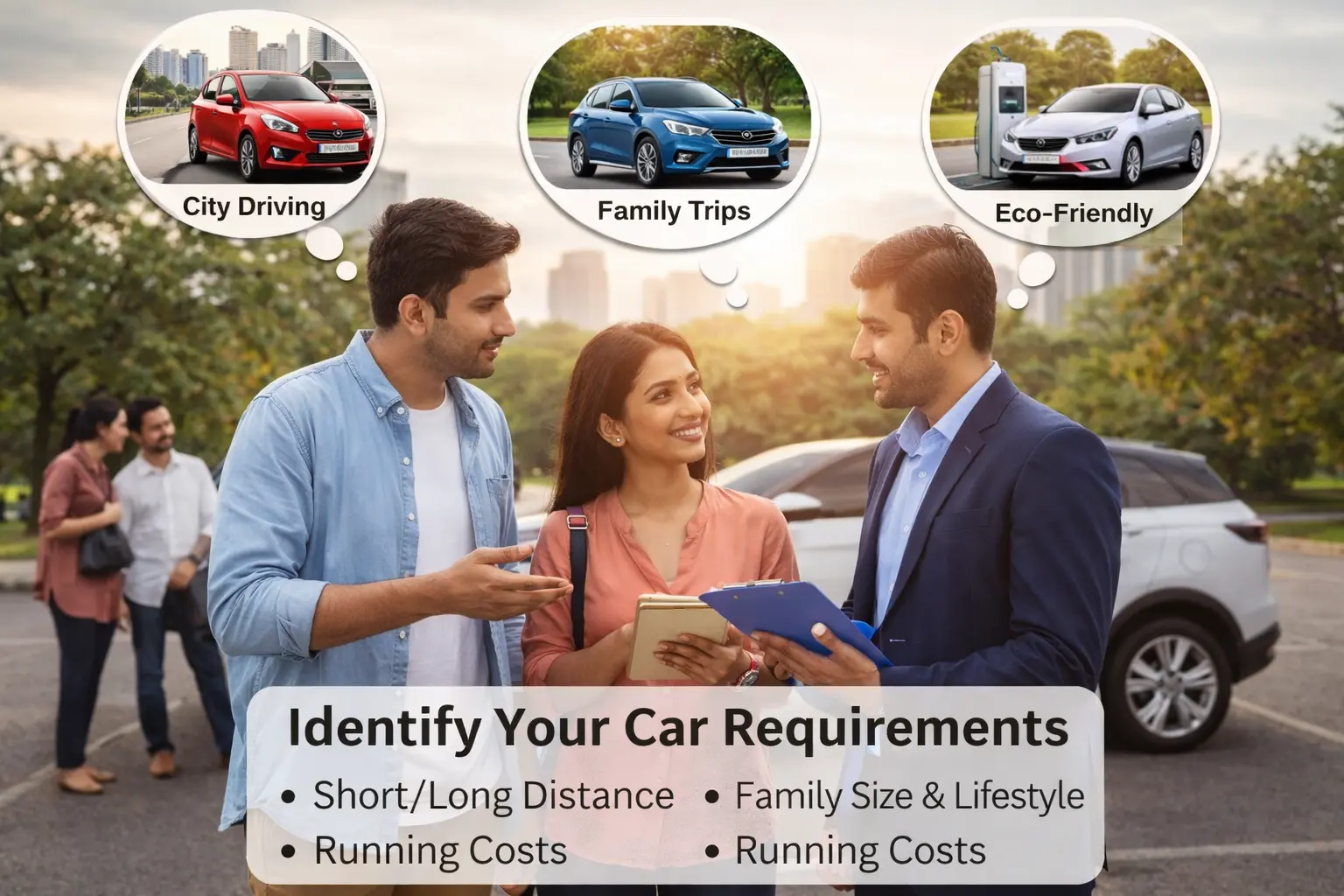
Before shortlisting models, clearly define what you need:
Family Size & Usage Pattern
Singles/Couples (No Kids):
- Hatchback or compact sedan sufficient
- Focus on fuel efficiency and parking ease
- Examples: Swift, Baleno, i20
Small Family (3-4 members):
- Compact sedan or compact SUV
- Balance of space and efficiency
- Examples: Honda City, Hyundai Venue, Tata Nexon
Large Family (5+ members):
- 7-seater SUV or MPV
- Prioritize comfort and space
- Examples: Maruti Ertiga, Hyundai Alcazar, Mahindra XUV700
Driving Conditions
Urban City Driving:
- Compact dimensions for easy parking
- Good ground clearance for speed breakers
- Automatic transmission recommended
- Examples: Tata Punch, Hyundai Exter
Highway Travel:
- Powerful engine (100+ HP)
- Good suspension for comfort
- Safety features (ESP, 6+ airbags)
- Examples: Hyundai Creta, Kia Seltos
Mixed Terrain:
- SUV with 200mm+ ground clearance
- AWD/4WD option
- Durable build quality
- Examples: Mahindra Scorpio N, Tata Harrier
Must-Have Features for 2026
Safety (Non-Negotiable):
- Minimum 6 airbags (soon mandatory)
- ABS with EBD
- Electronic Stability Program (ESP)
- TPMS (Tire Pressure Monitoring)
- Rear parking sensors and camera
- ISOFIX child seat mounts
Convenience:
- Touchscreen infotainment (8-10 inches)
- Android Auto & Apple CarPlay
- Climate control (for premium segments)
- Keyless entry and push-button start
- Automatic headlamps and wipers
Modern Tech (2026 Standard):
- Connected car features
- OTA software updates
- Voice commands
- 360-degree camera (premium models)
- Wireless charging
- Level 2 ADAS (adaptive cruise control, lane keep assist)
5. Step 4: Research and Shortlist Models
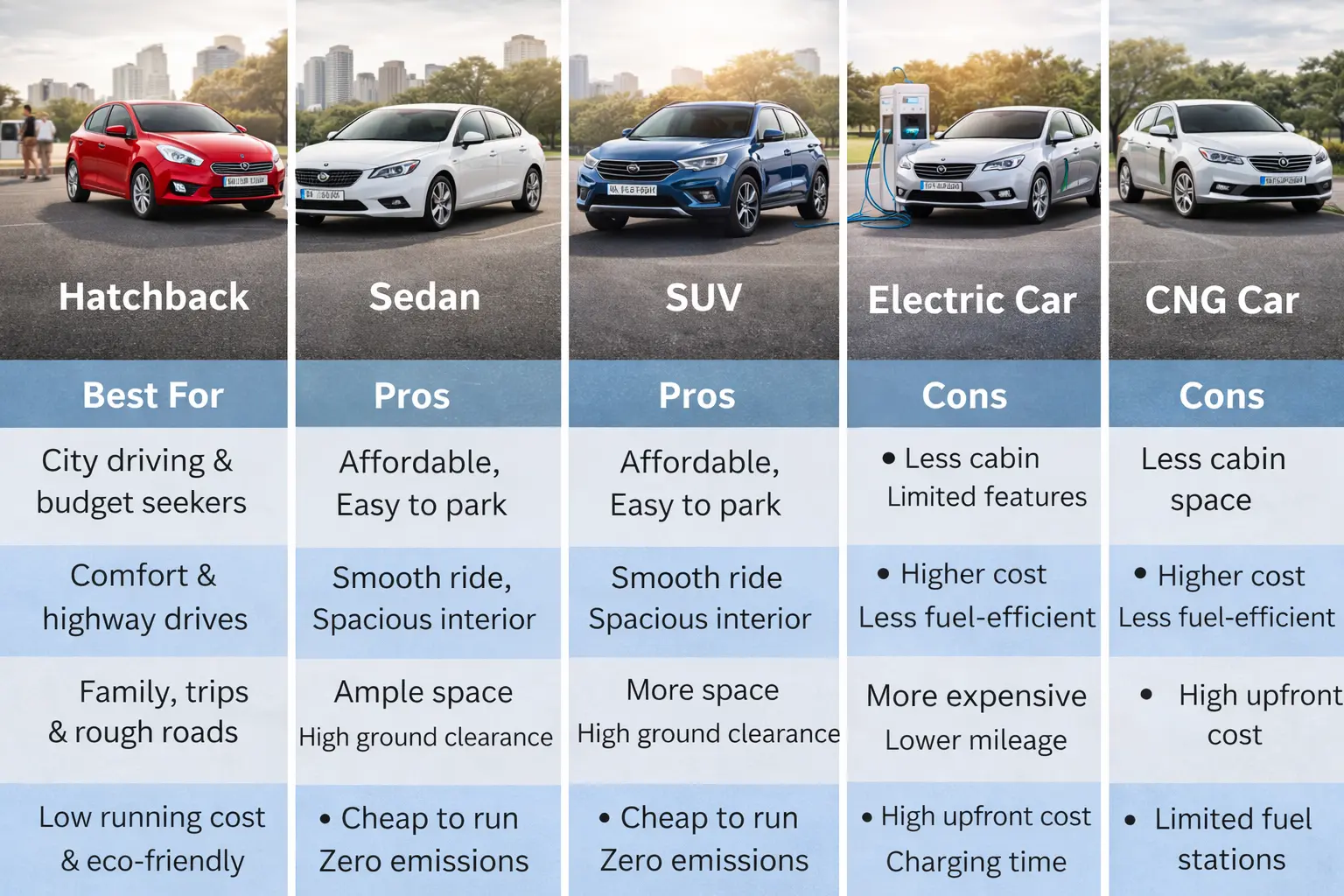
How to Research Effectively
Online Resources:
- Official manufacturer websites for accurate specs
- CarDekho, CarWale for comparisons and reviews
- YouTube channels (AutocarIndia, PowerDrift, MotorBeam)
- Owner forums and social media groups
- Wait4Ads for used car market insights
Key Factors to Compare:
- Price & Variants: Compare on-road prices across cities
- Specifications: Engine power, torque, transmission options
- Fuel Efficiency: ARAI figures vs real-world numbers
- Safety Ratings: GNCAP or BNCAP crash test scores
- Features: Compare trim-wise feature list
- Dimensions: Boot space, legroom, ground clearance
- Warranty: Standard warranty terms and extended options
- Service Network: Authorized service centers in your city
- Resale Value: Historical depreciation data
- Owner Reviews: Real-world feedback
Create a Comparison Sheet
| Feature | Car 1 | Car 2 | Car 3 |
|---|---|---|---|
| Price (On-Road) | |||
| Engine (HP/Torque) | |||
| Mileage (km/l) | |||
| Safety Rating | |||
| Boot Space (L) | |||
| Ground Clearance | |||
| Warranty | |||
| Key Features | |||
| Monthly Maintenance |
6. Step 5: Visit Dealerships & Test Drive
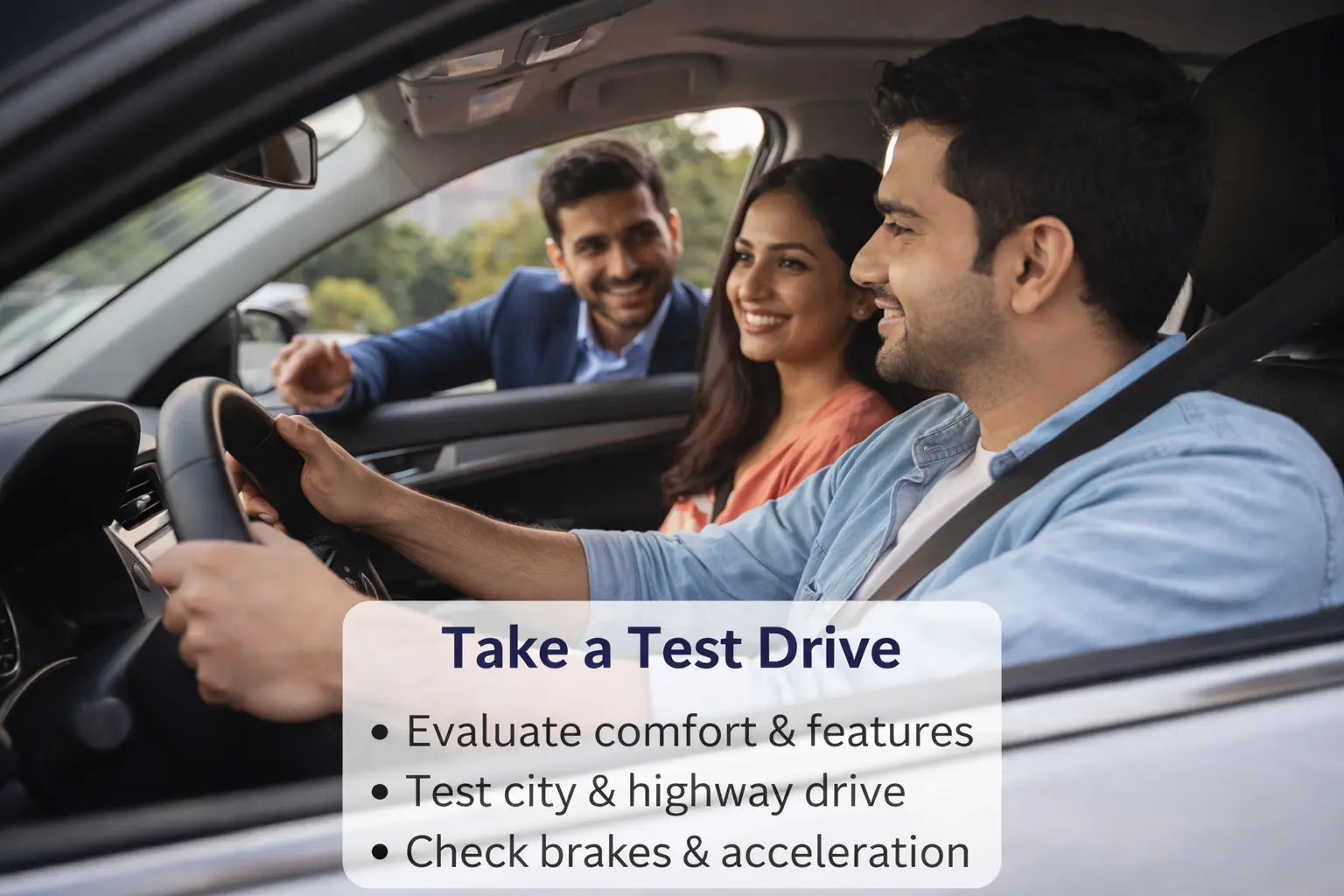
Never Skip the Test Drive
A test drive reveals what specs cannot:
What to Check During Test Drive:
Engine & Performance:
- Acceleration response (0-60 kmph feel)
- Engine noise and vibrations
- Gear shifts (smoothness)
- Clutch feel (for manual)
- Braking response
Comfort:
- Driving position and seat comfort
- Visibility (blind spots)
- Cabin noise levels
- Ride quality over bumps
- AC cooling effectiveness
Features:
- Infotainment system responsiveness
- Control placement ergonomics
- Storage spaces adequacy
- Ease of parking
Test Different Conditions:
- City traffic
- Highway stretch (if possible)
- Rough roads/speed breakers
- Parking maneuvers
Questions to Ask Dealer
- What is the current waiting period?
- Are there any ongoing discounts or offers?
- What is included in the base price vs on-road price?
- What are the service costs for first 3 years?
- What is the buyback/exchange value after 3-5 years?
- Are there any manufacturing updates planned soon?
- What accessories are available and at what cost?
- What is the insurance claim settlement ratio?
- How many service centers in my city?
- What is the warranty coverage in detail?
Red Flags to Watch
- Pushy sales tactics or pressure to book immediately
- Vague answers about pricing or hidden costs
- Reluctance to provide test drives
- No clarity on delivery timelines
- Poor after-sales service reputation
7. Step 6: Negotiate the Best Deal

Understanding Dealer Margins
Dealers typically have:
- 3-6% margin on car price
- Additional earnings from insurance, accessories, extended warranty
- Monthly/quarterly targets with manufacturer incentives
Negotiation Strategies
Timing is Everything:
- Best Time to Buy: End of financial quarter (December, March)
- Festival Season: Diwali, year-end offers
- New Model Launch: Previous gen discounts
- Month-End: Dealers rush to meet targets
Negotiation Points:
- On-Road Price Discount: Negotiate 2-4% off MRP
- Free Accessories: Mats, mud flaps, seat covers (worth ?5,000-?15,000)
- Better Exchange Value: Get 5-10% more for your old car
- Free Insurance Add-ons: Zero depreciation, engine protection
- Extended Warranty: Negotiate cost or get free
- Free Services: First 2-3 services complementary
Negotiation Script:
"I've researched thoroughly and I'm ready to buy today if the deal is right. I've received quotes from [competitor dealer]. Can you match or better this offer?"
Compare Multiple Dealers
Visit 3-4 dealers of the same brand:
- Different dealers offer different discounts
- Use one quote to negotiate with another
- Check online aggregators (CarDekho, Cars24) for corporate discounts
Don't Fall for These Traps
- Unnecessary Add-ons: Rust protection, paint sealant, engine coatings (high margin items)
- Overpriced Insurance: Compare with online insurance platforms
- Extended Warranty Pressure: You can buy later
- Dealer Financing: Sometimes bank loans are cheaper
8. Step 7: Understand Financing Options
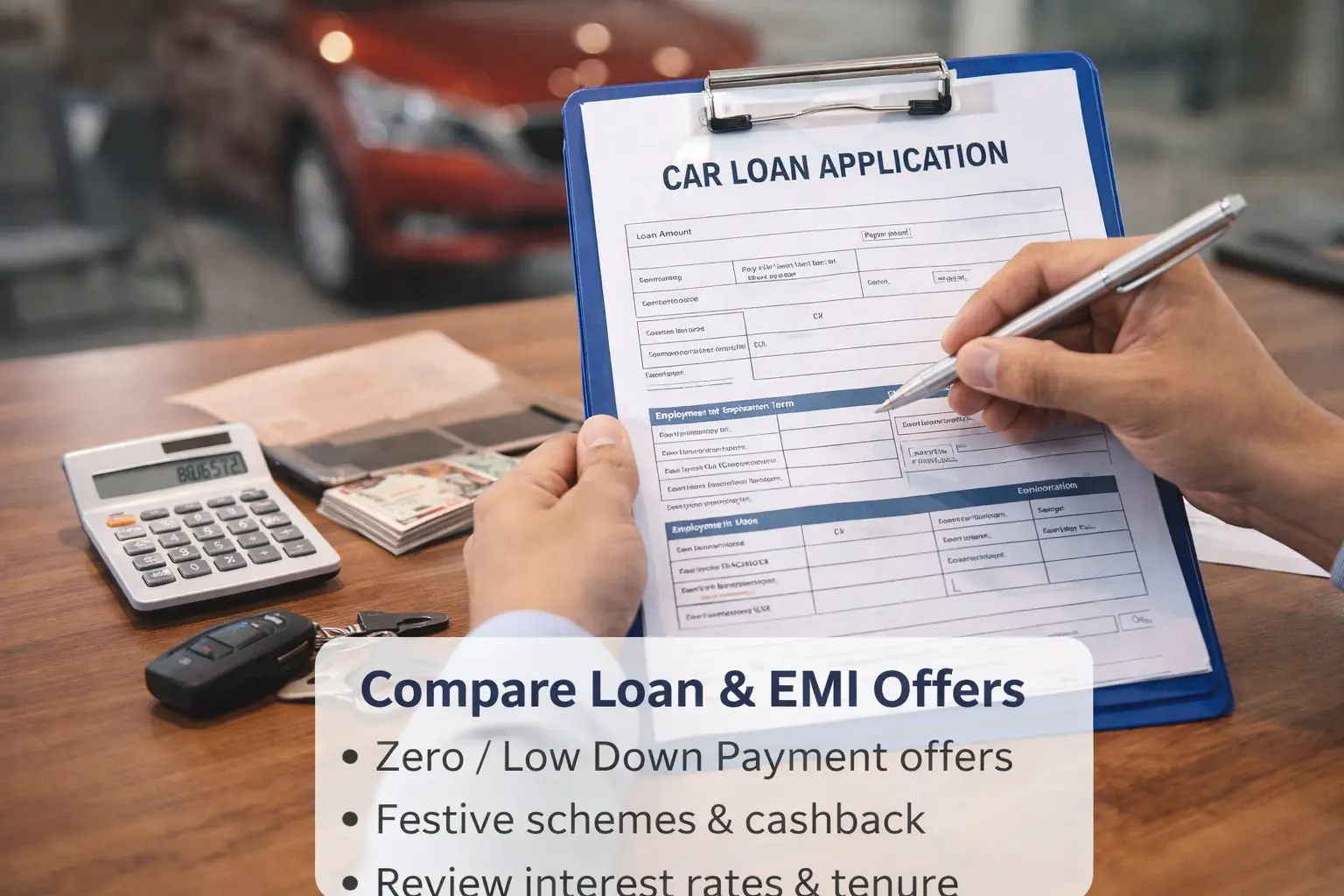
Loan vs Cash Purchase
Take a Loan if:
- You can invest the cash elsewhere at higher returns (12%+ in equity)
- Interest rates are low (below 8.5%)
- You want to maintain liquidity for emergencies
- You can claim tax benefits (for business use)
Pay Cash if:
- You have surplus funds not earning good returns
- Interest rates are very high (above 10%)
- You want zero debt burden
- You're close to retirement
Types of Car Loans
Bank Loans:
- Interest Rate: 8.5-11% per annum
- Loan Amount: Up to 90% of car value
- Tenure: 1-7 years
- Advantages: Lower interest rates, faster approval
- Best For: Salaried individuals with good credit score
NBFC Loans:
- Interest Rate: 9-14% per annum
- Loan Amount: Up to 95% of car value
- Advantages: Easier approval, flexible terms
- Best For: Self-employed or lower credit score
Dealer Financing:
- Usually tied up with specific banks/NBFCs
- May have promotional rates
- Quick processing but compare rates independently
Used Car Loans:
- Higher interest (12-16%)
- Lower loan-to-value ratio (70-80%)
- Shorter tenure (5 years max)
How to Get the Best Interest Rate
Improve Your Credit Score:
- 750+ score gets best rates
- Check CIBIL score 3 months before applying
- Clear any existing small debts
Increase Down Payment:
- 30-40% down payment reduces interest burden significantly
- Shows financial stability to lenders
Choose Shorter Tenure:
- 3 years vs 5 years can save ?50,000-?1 lakh in interest
- Higher EMI but lower total cost
Compare Multiple Lenders:
- Get quotes from 4-5 banks/NBFCs
- Even 0.5% rate difference matters over loan period
EMI Calculation Example
Car Price: ?10 lakhs (on-road)
Down Payment: ?3 lakhs (30%)
Loan Amount: ?7 lakhs
| Interest Rate | Tenure | Monthly EMI | Total Interest |
|---|---|---|---|
| 9% | 3 years | ?22,240 | ?80,640 |
| 9% | 5 years | ?14,541 | ?1,72,460 |
| 11% | 5 years | ?15,278 | ?2,16,680 |
Key Insight: Longer tenure = Lower EMI but much higher total interest paid
Hidden Loan Costs to Watch
- Processing fees (0.5-2% of loan amount)
- Prepayment charges (2-5% if closing loan early)
- Late payment penalties
- Foreclosure charges
9. Step 8: Insurance Essentials
Types of Car Insurance
Third-Party Insurance (Mandatory by Law):
- Covers damage to other vehicles/property
- Covers injury to third parties
- Does NOT cover your own car damage
- Annual cost: ?2,000-?5,000 (varies by engine capacity)
Comprehensive Insurance:
- Covers third-party + own damage
- Theft coverage
- Natural calamities (flood, earthquake)
- Man-made disasters (riots, vandalism)
- Annual cost: 3-5% of car IDV (Insured Declared Value)
Must-Have Add-On Covers for 2026
Zero Depreciation Cover:
- No depreciation deduction on claims
- Essential for new cars (first 5 years)
- Cost: Additional 15-20% on premium
- Highly Recommended
Engine Protection Cover:
- Covers water damage to engine (monsoon essential)
- Cost: ?1,500-?3,000 annually
- Recommended for high rainfall areas
Return to Invoice:
- Get full invoice value if car is totaled/stolen
- Useful for first 3 years
- Cost: Additional 10-15% premium
Consumables Cover:
- Covers costs of nuts, bolts, oils during repairs
- Cost: ?500-?1,500
- Nice to have
Roadside Assistance:
- Towing, flat tire, battery jumpstart
- Often included free in premium policies
- Essential
How to Save on Insurance
- Compare Online: Use PolicyBazaar, Acko, Digit
- No Claim Bonus (NCB): Save 20-50% with claim-free years
- Install Anti-Theft Devices: Get 2.5% discount
- Voluntary Deductible: Choose ?5,000-?10,000 deductible to lower premium by 15-20%
- Buy Directly Online: Skip agent commission
Insurance Red Flags
- Unusually low premium quotes (may have hidden exclusions)
- Claim settlement ratio below 85%
- Limited network garages
- Poor customer service reviews
10. Step 9: Complete Documentation & Registration
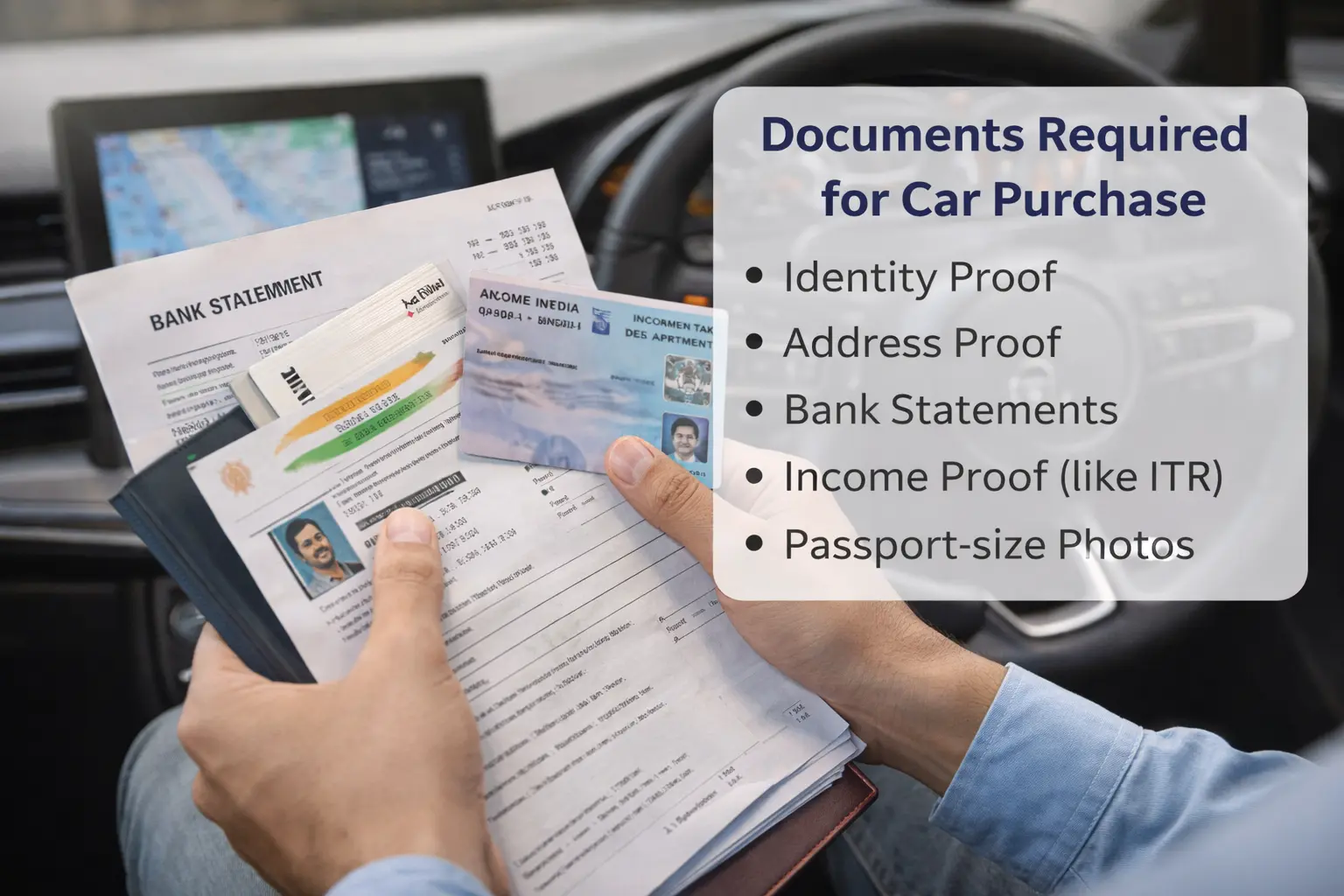
Documents Required for Car Purchase
For Loan:
- Identity Proof (Aadhar, PAN, Passport)
- Address Proof (Utility bill, Rent agreement)
- Income Proof (Salary slips, ITR, bank statements)
- Employment Proof (Offer letter, ID card)
- Photographs
For Cash Purchase:
- Identity and Address Proof
- PAN Card (for transactions above ?10 lakhs)
- Cancelled cheque or bank account details
For Registration:
- Form 20 (Application for registration)
- Form 21 (Sale certificate from dealer)
- Insurance copy
- PUC certificate (Pollution Under Control)
- ID and address proof
- Passport-size photographs
Registration Process Timeline
- Booking (Day 0): Pay token amount
- Invoice Generation (Delivery Day): Full payment
- Temporary Registration (Same Day): Valid 1 month
- Permanent Registration (15-30 days): RTO completes
Number Plate Options 2026
- Standard White Plate: Private vehicles
- Yellow Plate: Commercial vehicles (Uber/Ola)
- Green Plate: Electric vehicles (no road tax in many states)
- Fancy Numbers: Book online through state RTO websites (auction system)
Documents You'll Receive
- Invoice copy
- Insurance policy document
- Registration Certificate (RC)
- Pollution Under Control (PUC) certificate
- User manual and service booklet
- Warranty card
11. Step 10: Post-Purchase Best Practices
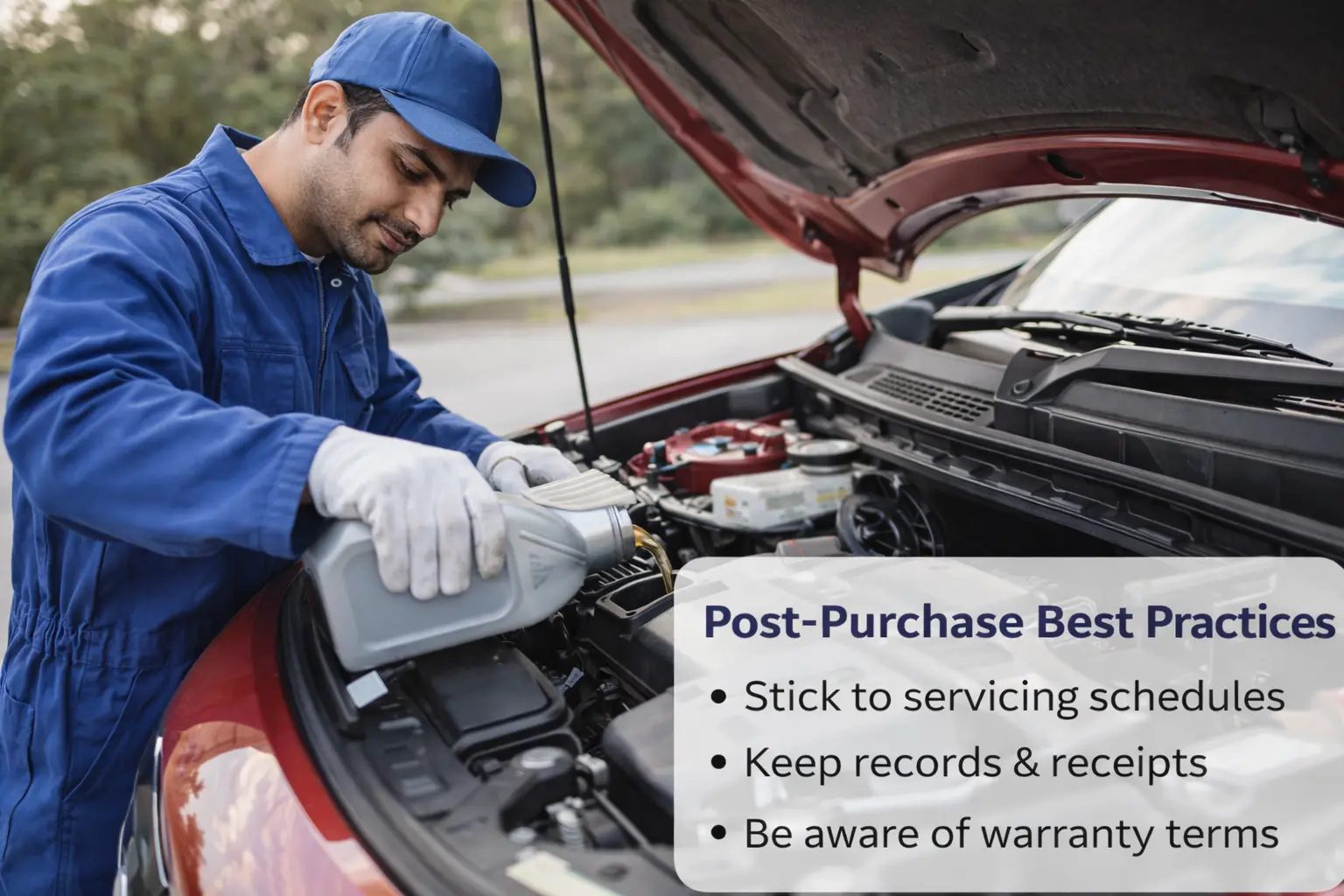
First 1,000 KM Break-In Period
Critical for Engine Longevity:
- Keep speeds under 80 kmph
- Avoid sudden acceleration/braking
- Don't overload the vehicle
- Vary your speed (don't cruise at constant RPM)
- First service at 1,000 km or 1 month (mandatory)
Maintenance Schedule
| Service Interval | Service Type | Approximate Cost | Key Activities |
|---|---|---|---|
| 1,000 km / 1 month | First Service | Free | Oil change, basic check |
| 10,000 km / 12 months | Annual | ?3,000-?5,000 | Oil, filters, brake check |
| 20,000 km / 24 months | Major | ?5,000-?8,000 | Spark plugs, alignment |
| 40,000 km / 48 months | Major | ?8,000-?12,000 | Timing belt, transmission |
Pro Tip: Stick to authorized service centers during warranty period
Essential Accessories to Buy
Day One Must-Haves:
- Dashcam (?2,000-?5,000) - Insurance claim evidence
- Floor mats (?1,000-?3,000) - Protect carpet
- Seat covers (?2,000-?5,000) - Keep original seats fresh
- First aid kit (?500-?1,000)
Within First Month:
- Parking sensors (if not factory-fitted)
- Sun shades (?500-?1,500)
- Car cover (if no covered parking)
- Tire inflator (?1,500-?3,000)
Nice to Have:
- Ambient lighting
- Wireless charger (if not built-in)
- Boot organizer
- Phone holder
Protect Your Investment
Exterior:
- Wash weekly (avoid sun hours)
- Wax every 3 months
- Ceramic coating (?8,000-?25,000) - Lasts 2-3 years
- PPF (Paint Protection Film) for front (?15,000-?50,000)
Interior:
- Vacuum regularly
- Use microfiber cloth
- Avoid eating inside
- Interior detailing every 6 months
Mechanical:
- Check tire pressure monthly (maintain as per manual)
- Check all fluids regularly
- Address warning lights immediately
- Avoid potholes and speed breakers at speed
Resale Value Protection
Maintain Service Records:
- Keep all service invoices organized
- Digital copies backed up
- Comprehensive service history adds 5-10% to resale value
Avoid Major Modifications:
- Loud exhausts
- Suspension changes
- Engine remapping
- These reduce resale value and may void warranty
Keep Original Parts:
- Store replaced parts
- Original alloys, music system, etc. improve resale
Expected Depreciation:
- Year 1: 15-20%
- Year 2: 10-15%
- Year 3: 10%
- Year 4+: 5-8% annually
12. Common Car Buying Mistakes to Avoid
Mistake #1: Buying Beyond Budget
- Focus on total cost, not just EMI affordability
- Remember running costs and maintenance
Mistake #2: Skipping Test Drive
- Never buy without driving the exact variant
- Test drive in real-world conditions
Mistake #3: Ignoring Safety Features
- Don't compromise on airbags and ESP
- Check GNCAP safety ratings
Mistake #4: Emotional Decisions
- Don't fall in love with design alone
- Practicality should win over looks
Mistake #5: First-Year Model
- Avoid brand new launches (wait for minor issues to be resolved)
- Second year models are more refined
Mistake #6: Ignoring Resale Value
- Some brands depreciate faster
- Check 3-year resale values of models
Mistake #7: Inadequate Insurance
- Don't just buy basic third-party
- Comprehensive with zero dep is essential
Mistake #8: Not Comparing Loan Offers
- Shop around for interest rates
- 1% difference = thousands in savings
Mistake #9: Dealer-Only Focus
- Check multiple dealerships
- Consider certified pre-owned as alternative
Mistake #10: Ignoring Service Network
- Ensure adequate service centers in your city
- Check service quality reviews
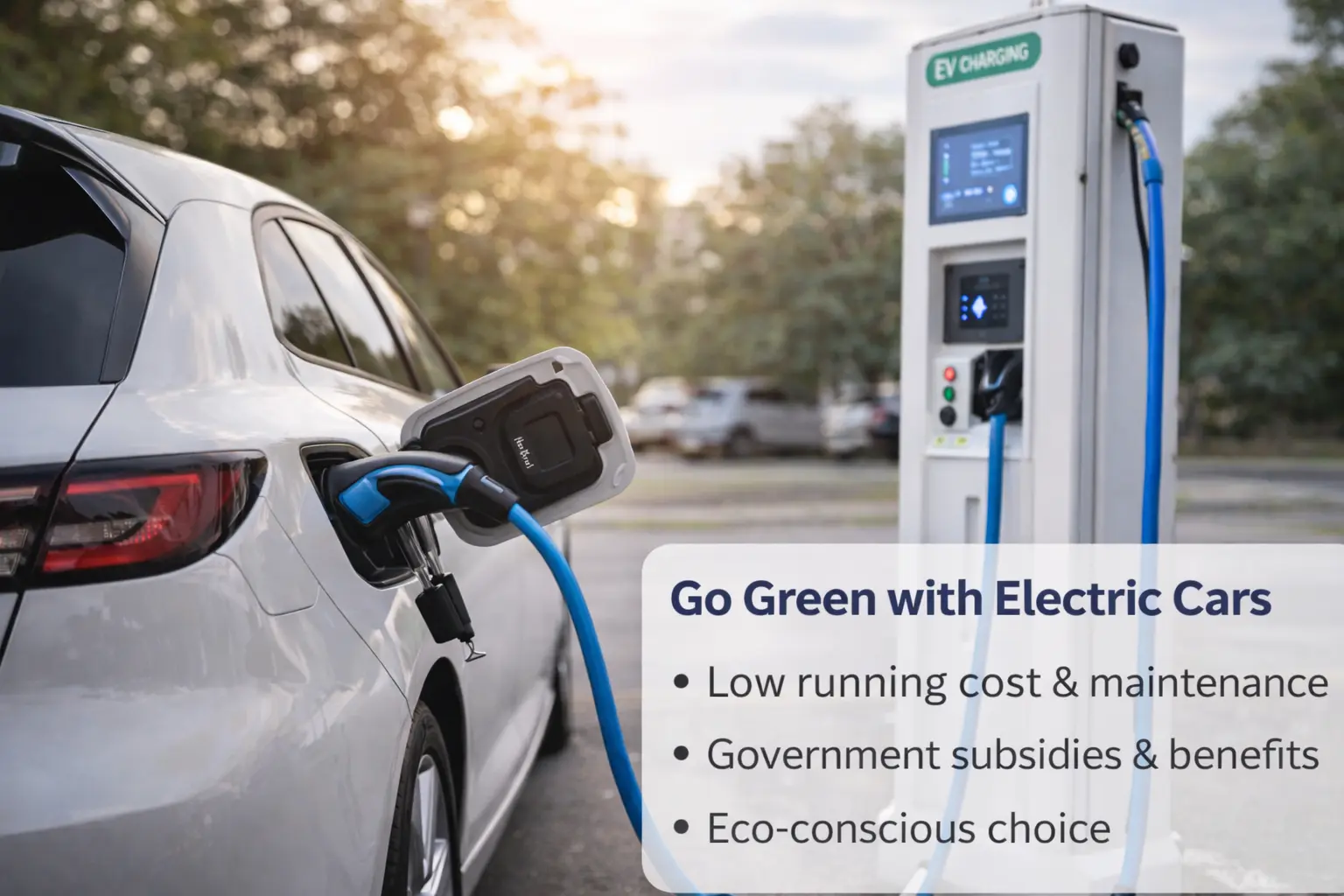
13. Electric Vehicle Specific Tips for 2026
Is 2026 the Right Time for EV?
Yes, if:
- Daily commute under 100 km
- Home charging facility available
- Charging stations on regular routes
- Want lowest running costs
- Government incentives still available
Wait if:
- Long interstate highway travel frequent
- No home/workplace charging
- Shared/street parking only
- Living in remote areas with poor infrastructure
EV Buying Checklist
Range:
- Certified range vs real-world (expect 20-30% less)
- Winter range drops 15-25%
- AC usage reduces range by 10-15%
Charging:
- Home charging setup cost (?15,000-?50,000)
- Electricity bill increase (?1,500-?3,000/month)
- Public fast charging network (check PlugShare app)
Battery Warranty:
- Minimum 8 years/1.6 lakh km
- Degradation coverage (usually 70% capacity guarantee)
Incentives:
- FAME III subsidy (?50,000-?1.5 lakhs)
- State subsidies (varies)
- Road tax exemption
- Lower registration charges
Best EVs for Different Budgets 2026
| Budget | Model | Range | Price (ex-showroom) |
|---|---|---|---|
| Under ?10L | Tata Tiago EV | 315 km | ?7.99-11.89L |
| ?10-15L | Tata Punch EV | 421 km | ?10.99-15.49L |
| ?15-25L | Tata Nexon EV | 465 km | ?14.49-19.29L |
| ?25-35L | MG ZS EV | 461 km | ?21.99-28.88L |
| ?35L+ | BYD Atto 3 | 521 km | ?33.99L |
14. Pre-Owned (Used) Car Alternative
When to Consider Used Instead of New
Strong Cases for Used:
- Budget under ?6 lakhs
- First car/learning to drive
- Need premium features at lower cost
- Depreciation is biggest cost savings
- Temporary need (2-3 years)
Buy New Instead if:
- Want latest safety tech
- Long-term ownership (7+ years)
- Want warranty peace of mind
- Can afford new comfortably
Used Car Buying Tips
Age Sweet Spot:
- 2-4 years old
- 30,000-60,000 km driven
- Single owner preferred
- Full service history available
Where to Buy:
- Certified Pre-Owned (CPO) from brands (warranty included)
- Wait4Ads classified platform (direct from owners)
- CarDekho, Cars24, Spinny (organized players with warranty)
Inspection Checklist:
- Engine oil condition and leaks
- Test drive on highway
- Check for accident repair (panel gaps, paint overspray)
- Verify chassis number on RC matches car
- Check for flood damage (corrosion in unexpected places)
- Get mechanic inspection (?1,000-?2,000)
Verification:
- RC transfer status
- Insurance validity
- Challan/fine clearance
- Hypothecation status (loan clearance)
- Original duplicate keys
Price Negotiation:
- Use online valuation tools (CarWale, CarDekho)
- Deduct repair costs from asking price
- Check similar listings on Wait4Ads
Frequently Asked Questions (FAQ)
1. What is the best month to buy a new car in India?
March (financial year-end) and December (calendar year-end) typically offer the best discounts as dealers rush to meet annual targets. Festival seasons like Diwali also bring good offers.
2. Should I buy a car on loan or pay cash?
If loan interest rates are below 9% and you can invest the cash elsewhere at higher returns, taking a loan makes financial sense. However, if you prefer zero debt or rates are high (10%+), pay cash.
3. How much down payment should I make?
Minimum 20-30% is recommended. Higher down payment (40-50%) reduces EMI burden and total interest significantly, potentially saving lakhs over loan tenure.
4. Is electric car better than petrol/diesel in 2026?
For city usage under 100 km daily with home charging, EVs offer lowest running costs (?1-1.5/km vs ?4-8/km for petrol/diesel). However, petrol/diesel remains better for long highway trips and areas with poor charging infrastructure.
5. What are the hidden costs when buying a new car?
Beyond the ex-showroom price, add: Road tax (8-12%), insurance (3-5%), registration (?5,000-?15,000), accessories (?10,000-?50,000), extended warranty, and first-year running costs (fuel, parking, tolls, maintenance).
6. How important is GNCAP safety rating?
Very important. Aim for minimum 4-star GNCAP rating. Safety features like 6 airbags, ESP, and strong body structure can be life-saving in accidents. Never compromise on safety for features or price.
7. Should I buy the top variant or base variant?
Buy the mid-variant with essential safety features (6 airbags, ESP, rear camera) and comfort features (touchscreen, climate control). Base variants often miss crucial safety features, while top variants have many unused features.
8. When is the best time to sell my old car?
Sell within 3-5 years to get best resale value (50-60% of original price). After 5 years, depreciation accelerates. Festival seasons and March see higher buyer activity, potentially getting 5-10% better prices.
9. How do I check if a used car was in an accident?
Check for: Uneven panel gaps, paint overspray on rubber/plastic parts, mismatched VIN stickers, new bolts on old panels, insurance claim history (ask for papers), and get professional inspection from authorized service center.
10. Can I negotiate car prices with dealer?
Yes, definitely. Dealers typically have 3-6% margin on car price plus earnings from insurance and accessories. Best negotiation happens during month-end, quarter-end, or when new model launches are imminent. Get quotes from multiple dealers.
Read More Blogs :- Upcoming Bikes , Sell Your Old Phone At Best Price
Table of Contents
Trending Keywords
Share This Review
Powered by Froala Editor