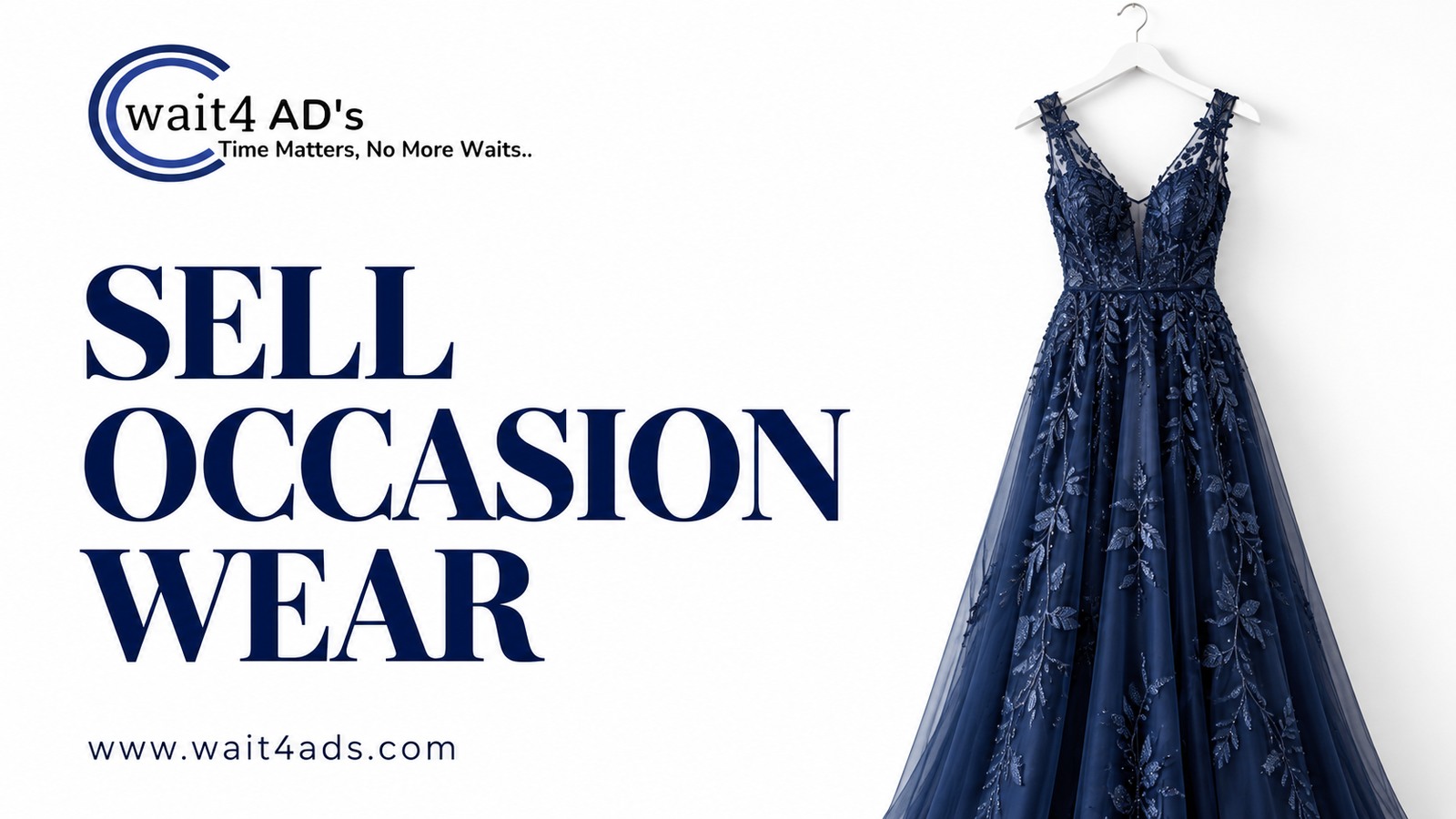
An occasion outfit can be difficult to evaluate from a single photograph. Buyers need to understand its fit, alterations, condition and exactly which pieces are included. Whether you are listing a lehenga, sari ensemble or dress, a clear description helps someone decide whether the outfit deserves a closer look.
Explore Women listings on Wait4Ads and use the checklist below when preparing an advert or discussing an item.
1. List every piece included
Lay out the complete outfit and count the pieces. For a lehenga set, specify the skirt, blouse and dupatta separately. For a sari, explain whether a blouse piece or stitched blouse is included. Mention belts, detachable sleeves, lining or other accessories only when they are part of the sale.
State the brand and fabric only when you have reliable information, such as a label or purchase record. If you are unsure, say so. A shiny appearance alone does not establish the fabric composition, and an embroidered label does not prove designer authenticity.
Keep jewellery, shoes and styling props out of the main image unless you clearly state that they are not included.
2. Provide measurements beyond the size label
Photograph the size label, then provide actual garment measurements. Lay the item flat without stretching it and explain your method. For example, label a waist measurement as “laid-flat width” rather than presenting it as a full circumference.
- For a blouse or dress: chest width, waist width, shoulder width, sleeve length and overall length where relevant.
- For a skirt: waist arrangement, laid-flat waist width and length.
- For a sari or dupatta: length and width, with the units stated.
Describe closures, drawstrings, elastic and any adjustable features. Ask buyers to compare the measurements with a garment that fits them. Do not promise a universal fit based on a small, medium or large label.
3. Explain alterations and wear
Record whether the outfit was shortened, taken in, let out or otherwise altered. State whether extra fabric is included, but avoid promising that a tailor can resize it by a particular amount unless that has been assessed.
Inspect seams, lining, underarms, hems, fasteners and embellishments. Note loose threads, missing stones or beads, stains, pulls, discolouration and repairs. Show a close-up of each important defect alongside an overall photograph.
“Worn once” describes use, not necessarily condition. Storage damage or staining can still matter. Describe what you can observe and avoid claiming the outfit is flawless simply because it was worn for one event.
4. Use consistent light and a plain background
Take front and back photographs, detail images and a picture of all included pieces together. Use even light and avoid filters that change the colour or hide marks. Explain that screen settings and lighting can affect how colour appears.
A hanger or clean flat surface can work well. If you use a person to show the outfit, obtain their permission and protect their privacy. Do not reuse someone else’s wedding or catalogue photographs as though they show your actual item.
Include a measuring-tape photograph for a key dimension when useful. Keep the tape readable and explain where the measurement starts and ends.
5. Set expectations about price and preparation
Compare similar items with similar condition, brand evidence and included pieces. Advertised prices are not proof of actual sale prices. Your original purchase cost may explain the item’s background, but it does not guarantee a resale value.
State whether the quoted amount is for the whole outfit and whether packing or delivery is extra. Follow the care label for any preparation; use a suitable professional cleaner when the garment’s care requirements call for it. Do not promise stain removal or attempt unfamiliar cleaning treatments just before a sale.
Describe cleaning status honestly. Allow enough time for any agreed cleaning, tailoring or delivery before a buyer’s event rather than promising an unconfirmed arrival date.
6. Agree on inspection and delivery details
Confirm measurements, included pieces, known flaws and any return arrangement in writing. For an in-person inspection, use a suitable agreed place and explain in advance whether a try-on is possible. Do not pressure anyone to share body photographs or unnecessary personal information.
For delivery, agree on packaging and the delivery method before payment. Protect delicate embellishments from snagging and keep the parcel dry. Photograph the packed contents for your records and retain the shipping receipt.
A useful title might be “Pre-Owned Navy Lehenga Set, 3 Pieces, Measurements Listed”. Replace colour and count with the real details. Update availability promptly after sale.
Frequently Asked Questions
Is the original size label enough?
No. Provide current measurements and disclose alterations so buyers can compare the outfit with clothing that already fits.
Should I mention a small stain?
Yes. Explain its location and show a clear photograph. Do not promise it will wash out unless that has been established.
Can I claim that an outfit is designer-made without proof?
Use only descriptions you can support. If the brand or maker is uncertain, say so rather than presenting it as authenticated.
Take the Next Step
For help organising your description, read our guide to writing a classified ad that gets responses. Use accurate details, current photographs and clear arrangements.
Table of Contents
Related Reading
Powered by Froala Editor