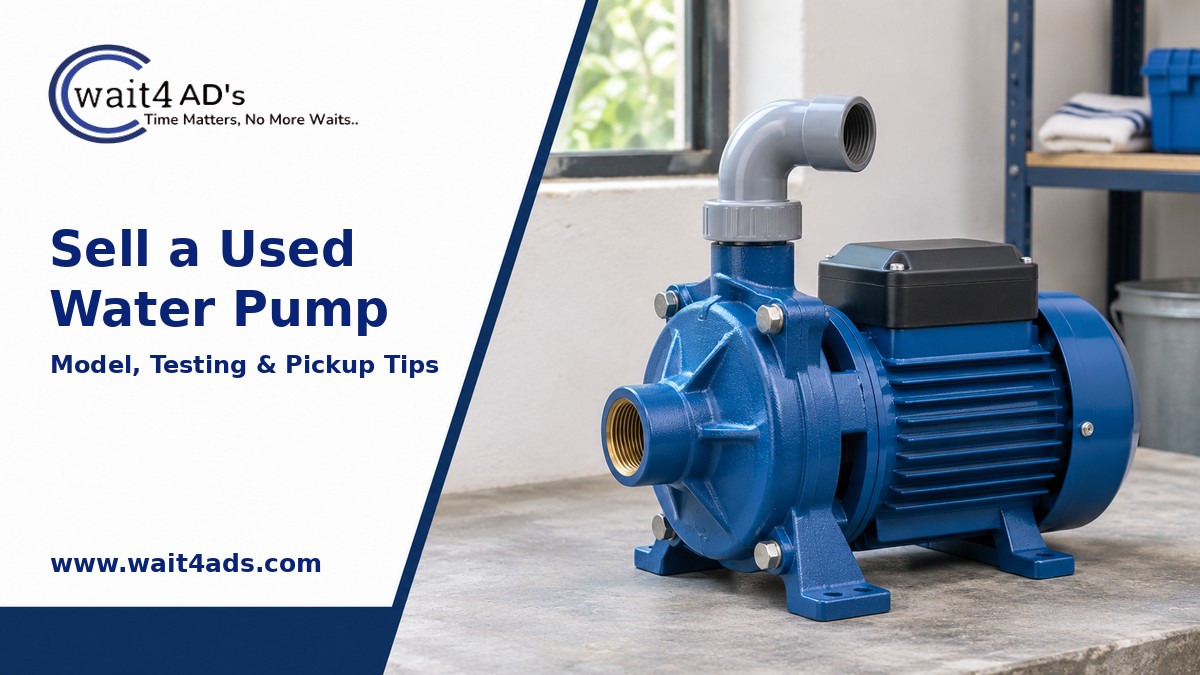
A used water pump listing should help buyers identify the pump, judge its visible condition and understand how it will be disconnected and collected. Share the exact details you can verify, show corrosion or damage clearly, and avoid claiming that the pump works unless it has been checked safely.
1. Identify the pump and its connections
Read the brand, model and electrical or capacity details from the nameplate, manual or original paperwork. Include power, voltage, phase, rated flow or head only when shown by the manufacturer for that exact model. Describe the pump type if you can identify it, and measure or photograph inlet and outlet connections instead of guessing their size. List accessories such as a foot valve, hose, cable, control switch or mounting base only if included.
2. Inspect the casing, cable and visible wear
Look for cracks, rust, mineral deposits, loose fittings, damaged insulation, frayed cable, leaking seals or signs of previous repair. Photograph the nameplate, casing, cable entry, inlet and outlet, mounting feet and any wear. Disclose whether the pump was used with clean water or another liquid if you know. Do not claim it is leak-free or fully functional based only on its appearance.
3. Describe any operating test safely
If a qualified person has tested the pump with a suitable connection and safe setup, say what was checked and when. Note unusual noise, vibration, overheating, leakage or an intermittent start. If you have not tested it recently, mark it as untested and say so. Do not energize exposed or damaged wiring, run the pump in an unsafe setup, or ask a buyer to handle electrical work without suitable qualifications. Follow the manufacturer’s instructions for any test and do not run a pump dry unless its design permits it.
4. Take photos that show the full unit
Photograph the pump from several sides, its label, fittings, cable and accessories. Add close-ups of corrosion, cracks, repairs or missing parts. Use even light and place the pump on a clean, stable surface. A short test video can be useful only if the test was carried out safely; state what it demonstrates and avoid presenting it as proof of long-term reliability.
5. Set a practical asking price
Compare the same make and model where possible, then consider age, verified operation, wear, repair history, included fittings and local pickup effort. A new retail price alone is not a good guide to the value of a used pump. Make clear whether the price includes any hoses, valves or control equipment. If an inverter or solar setup is separate, list it separately and describe what is included; see our used home inverter selling guide for related listing details.
6. Plan disconnection, pickup and handover
State whether the pump is still installed and who will arrange disconnection. A qualified person should isolate power and disconnect plumbing before removal; do not promise removal or installation unless agreed. Mention the approximate weight or dimensions if you can measure them, and agree on transport before the buyer arrives. Keep openings capped or protected for transport, and confirm payment in your account before handing over the equipment. Never share an OTP, UPI PIN or password to receive money.
Frequently asked questions
Can I sell a pump that has not been tested?
Yes. Mark it as untested, describe what you can see and state any known history or faults. Do not describe it as working if you cannot verify that.
Should I include pipes or valves?
Only if they are part of the sale. List each accessory and show it in the photos; state its condition and approximate size when known.
Should I remove the pump myself?
Only if you are qualified to disconnect its power and plumbing safely. Otherwise state that it remains installed and arrange removal with a qualified person before pickup.
Powered by Froala Editor