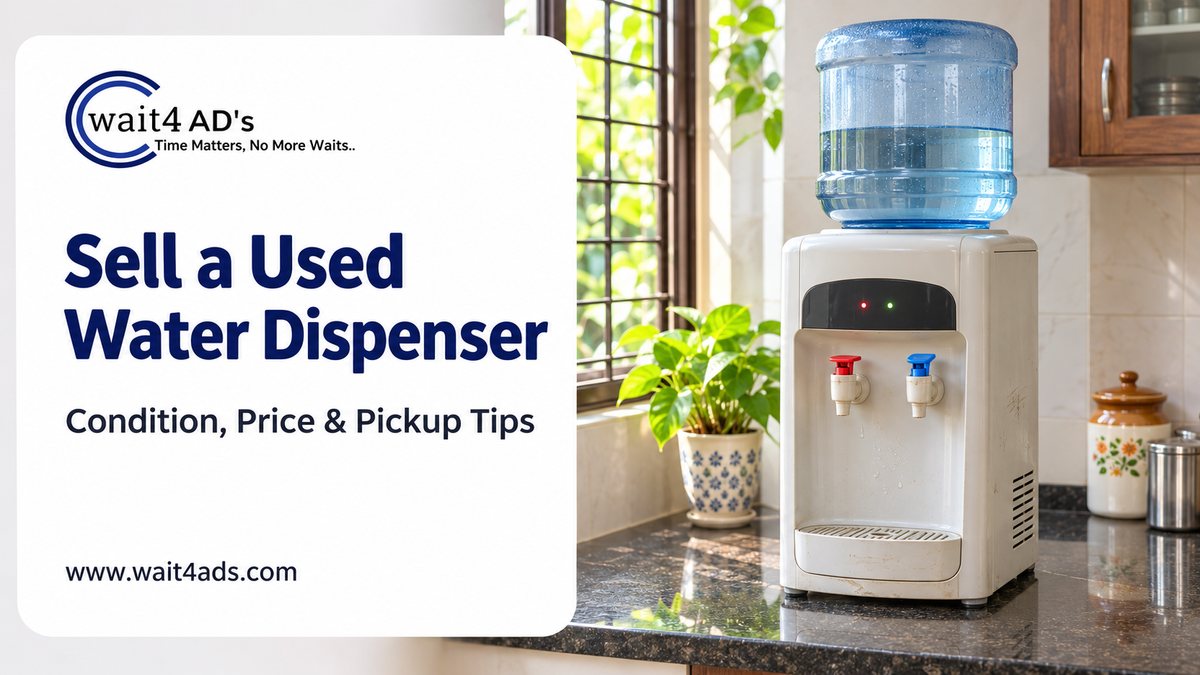
A used water dispenser can be easier to sell when buyers can tell what type it is, how it works and what they will need to move it. Share its brand, model, cooling or heating features, condition and included accessories. Clear photos and honest details help avoid surprises at pickup.
1. Identify the dispenser and its features
Check the label for brand, model and power information. Say whether it is a countertop or freestanding unit and whether it uses a top-loading bottle, bottom-loading bottle or direct connection. List hot, cold or room-temperature taps only if the model has them. Mention any bottle stand, drip tray, storage cabinet, manual or accessories included. Do not assume the unit filters water; a dispenser and a purifier perform different functions.
2. Inspect it and describe its condition
Look over the body, taps, bottle seat, drip tray, power cable and visible fittings. Note cracks, stains, rust, leaks, loose switches or unusual noise. If a water line is attached, inspect the connection for visible damage without dismantling it. Mention the unit’s age and any repair history you know. Do not hide a leak or describe a faulty heating or cooling function as working.
3. Explain what you safely tested
Only test a unit that appears undamaged, dry around electrical parts and safe to operate. Follow the manufacturer’s instructions and use a suitable water bottle or connection. Explain which functions you checked and how long you observed them. Do not run heating or cooling features dry if the manual requires water, and do not open the casing or attempt electrical repairs. If you are unsure, leave the unit unplugged and state that it is untested. Stop if you notice a leak near wiring, a burning smell or unusual noise.
4. Take useful photos
Use daylight and a tidy background. Photograph the full front and sides, taps, bottle area, controls, model label, power plug and any wear. Show the drip tray and storage compartment if present. If the dispenser is connected to plumbing, do not expose private details in the background. Avoid catalogue photos in place of the actual unit, and make any damage easy to see.
5. Choose a fair asking price
Compare the same model or close alternatives, accounting for age, working functions, cosmetic wear, service history, accessories and local pickup. A bulky unit may need buyer-arranged transport, which can affect interest. Set a clear fixed or negotiable price. If one function does not work or the unit is untested, disclose that near the start and price it accordingly.
6. Write a complete listing and plan pickup
Use a direct title such as “Freestanding Hot and Cold Water Dispenser — Jaipur,” changing it to match the actual model and city. Include the type, features, age, dimensions if known, test results, faults, included parts, price and broad locality. Tell buyers whether they must arrange lifting or transport. Agree on the final amount and what is included before collection. Keep the unit unplugged for moving, drain remaining water as directed by the manual, and confirm payment in your own account before handing it over. Never share an OTP or PIN.
7. Frequently asked questions
Is a water dispenser the same as a purifier?
No. Describe only the functions of your specific unit. Do not claim it filters or purifies water unless that capability is documented for the model.
Should I sell it if one tap is faulty?
You can describe the fault clearly and price the unit to reflect it. Do not call the tap or the dispenser fully working.
What should buyers know about delivery?
Share the approximate size and weight if known, whether stairs or a lift are involved, and who will arrange transport.
Ready to take the next step?
Browse Electronics & Appliances or post your own ad on Wait4Ads. Confirm condition and pickup arrangements directly with the buyer.
Table of Contents
Related Reading
Powered by Froala Editor