A used violin listing should help a musician judge its size, condition, sound and included accessories before arranging a visit. Share what you know about its make, age and setup, describe visible wear honestly, and use clear photos of the actual instrument. Specific details help buyers compare it with other violins in their area.
1. Identify the violin and its size
Check the label inside the instrument, if accessible without forcing anything, and note the maker, model or country of origin only when you can verify it. Include the size marking, such as full size or fractional size, if known. Mention whether the bow, case, shoulder rest, rosin or spare strings are part of the price. Do not call an instrument a particular brand based on appearance alone.
2. Describe its condition honestly
Look for cracks, open seams, scratches, loose fittings, worn pegs, bridge movement or missing parts. Check the case and bow too. Explain if strings are old, the bow needs rehairing, or the violin has been stored for a long time. Avoid tightening or adjusting parts you are unfamiliar with, and do not attempt repairs for the listing. If you know it needs attention from a violin maker, say so clearly.
3. Explain what you can verify about playability
If you are comfortable playing it, describe whether you tried the strings and what you noticed. If you are not a player, say whether it is untested rather than calling it ready to play. A buyer may want a teacher or instrument technician to inspect it. Avoid promising sound quality, tuning stability or professional setup unless you have a reliable basis for that claim.
4. Take clear photos of the violin and accessories
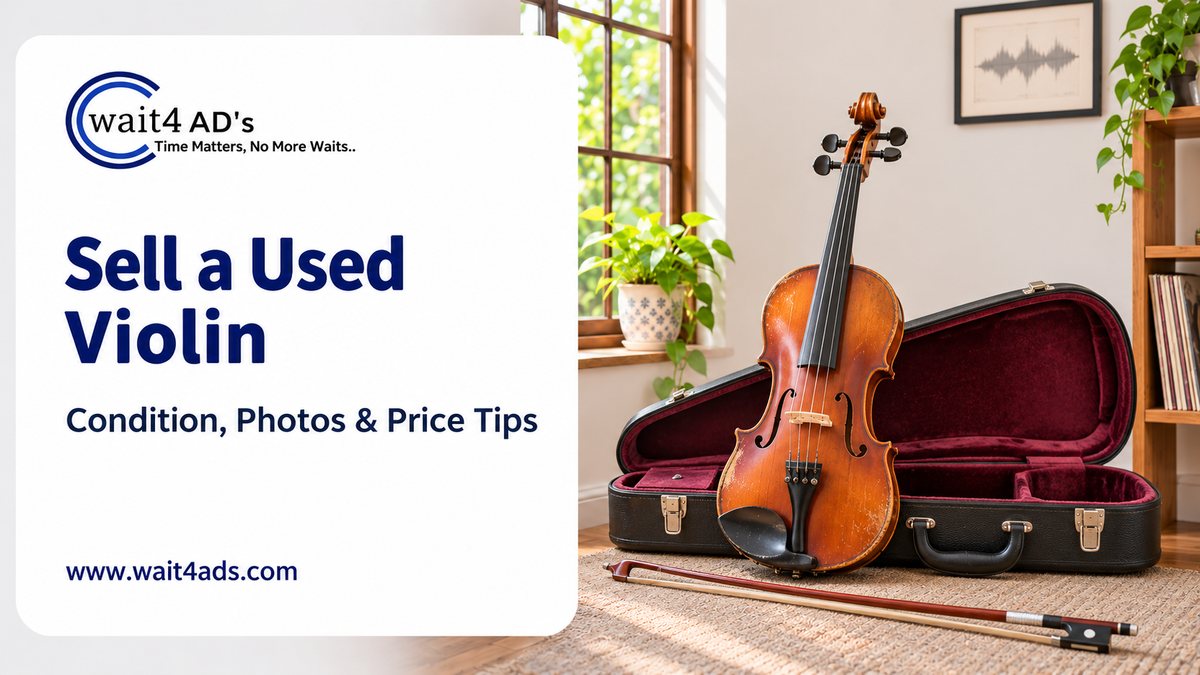
Photograph the full front and back, scroll, fingerboard, bridge, tailpiece and any visible damage. Include the bow and open case so buyers can see their condition. A readable label photo can help with identification, but avoid showing personal receipts or contact details. Use natural light and a plain background; do not rely on stock photos or filters that hide scratches.
5. Set a fair asking price
Compare instruments with the same size, maker or model, condition and included accessories. Account for any repair or setup that a buyer may need, and remember that a case and bow do not automatically mean the violin is ready to play. Choose a clear fixed or negotiable price and state whether it covers the full bundle. If you are unsure of its age or maker, avoid pricing it as a rare or professional instrument without documentation.
6. Write the listing and plan a careful handover
Use a direct title such as “Full-Size Violin with Case and Bow — Jaipur,” changing the details to match your instrument and city. Include size, verified maker or label details, condition, what you tested, known repairs, accessories, price and broad pickup locality. Keep the violin protected in its case during transport. Let the buyer inspect it in a suitable place, agree on the items and final amount beforehand, and confirm payment in your own account before handing it over. Never share an OTP or PIN.
7. Frequently asked questions
Should I include the bow and case?
State clearly whether each is included and photograph its condition. If selling separately, list the price for each item.
Can I sell a violin that needs setup?
Yes, if you disclose that it may need adjustment or repair and price it accordingly. Do not describe it as ready to play unless you know that is accurate.
How do I describe the violin’s size?
Use the size marking or a measurement you can verify. Fractional sizes matter to learners, so avoid guessing.
Ready to take the next step?
Browse Musical Instruments or post your own ad on Wait4Ads. Include the details a musician needs to decide whether to arrange a viewing.
Table of Contents
Related Reading
Powered by Froala Editor