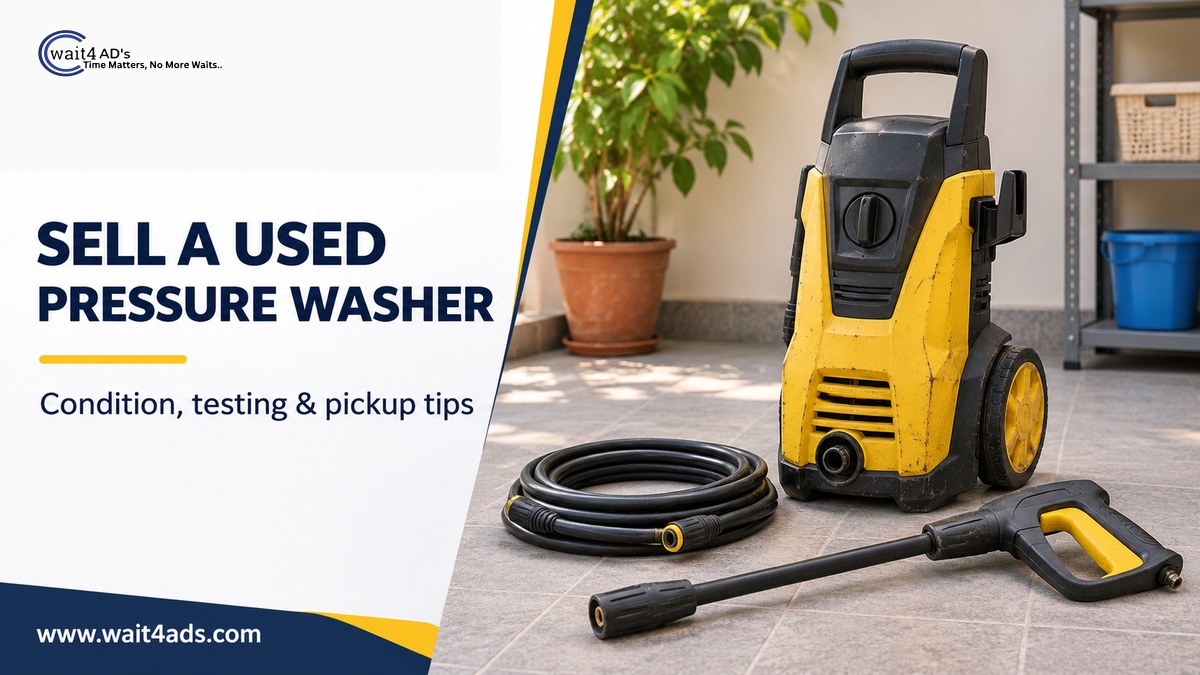
Selling a used pressure washer is easier when a buyer can identify the model, understand what accessories are included and see how its condition has been described. A clear listing should separate what you have personally tested from what you have not, especially if the machine has been stored for a while.
1. Identify the washer and its accessories
Use the brand and model shown on the rating label or manual. Include the rated pressure, flow, voltage or power only when you can verify it from the exact model’s label or manufacturer information. List the hose, spray gun, lance, nozzle tips, detergent attachment, inlet filter and any adapters that are part of the sale. If you are unsure about a part’s name, photograph it instead of guessing.
2. Check visible condition and storage history
Inspect the casing, wheels, handle, hose, connectors, trigger, cable or plug, and inlet and outlet for cracks, leaks, corrosion, cuts or missing pieces. Note any repairs and whether it was stored indoors or exposed to weather, if known. Photograph scuffs, damaged insulation, loose fittings and other faults clearly. Do not describe it as leak-free or fully functional based on appearance alone.
3. Describe a test accurately and safely
If you have tested the washer recently using the manufacturer’s instructions and a suitable safe setup, say what you checked: starting, pressure delivery, trigger operation, leakage and whether the motor stopped as expected. Mention any pulsing, unusual noise, overheating or intermittent operation. If it has not been tested, state that plainly. Never energize damaged wiring, bypass safety features or use the machine with an unsuitable power connection. If you are unsure how to test it safely, leave that to a qualified person.
Follow the manual about water supply, priming, maximum operating time and storage. Do not run a washer without water if the manufacturer warns against it, and never point the spray at people, animals, electrical equipment or fragile surfaces.
4. Take useful photos
Show the full washer from the front and sides, its model label, cable and plug, hose, gun, lance, nozzle tips and every included accessory. Add close-ups of cracks, worn seals, corrosion or repairs. Use bright even light and a clean background. A short operating video can help only if the test was performed safely; explain exactly what it demonstrates rather than treating it as a guarantee of future performance.
5. Set a realistic asking price
Compare the same model or similar specifications, then account for age, condition, test status, hose and nozzle completeness, repair history and local pickup effort. A new retail price is not the resale value of a used machine. If a replacement hose or accessory is missing, mention it and price accordingly. You may state that reasonable offers are welcome, but avoid claiming a specific market value without checking comparable listings.
6. Write the listing and plan handover
Put the model in the title and summarise tested functions, known faults, included attachments and whether the machine is tested or untested. You can browse Home Decor & Garden listings on Wait4Ads for a relevant category. Before pickup, drain and secure water from the hose and machine according to the manual, protect the connectors, and agree who will carry the equipment. Confirm payment in your own account before handing it over; never share an OTP, UPI PIN or password to receive money.
Frequently asked questions
Can I list a washer that has not been tested?
Yes. Mark it as untested, describe its visible condition and disclose any known history. Do not call it working unless you can support that description.
Should I include the accessories?
List only the parts included in the sale and show them in the photos. If a nozzle, hose or adapter is missing, say so clearly.
Can a buyer test it at pickup?
Agree on a safe test area, water supply and suitable power connection in advance. Do not ask anyone to use damaged wiring or bypass the maker’s instructions.
Powered by Froala Editor