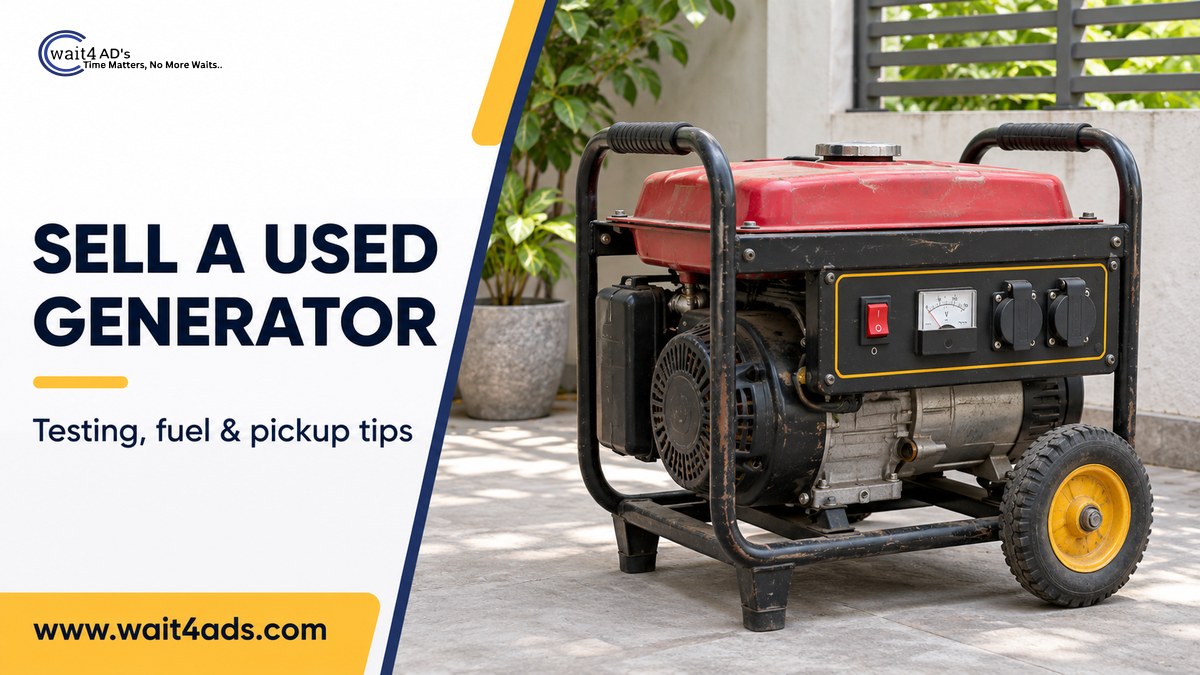
A used portable generator can be valuable to the right buyer, but listings need to be precise about its type, output, condition and test status. Share details from the nameplate and manual, photograph what is included, and explain the pickup plan for a heavy machine. Never claim that a generator works unless you can describe a safe, recent test.
1. Identify the generator and its rated output
Record the brand and model from the rating plate. State whether it is petrol, diesel, inverter type or another design only when you can verify that. Include rated running output and any higher starting output only if the exact manual or label lists both. Note voltage, frequency and phase where shown. List included cables, wheels, handles, toolkit, manual or other accessories. Do not infer what appliances it can power from a vague wattage estimate.
2. Describe condition, fuel and service history
Inspect the frame, casing, handles, wheels, control panel, sockets, fuel tank, visible hoses, and engine area for dents, rust, leaks, damaged plugs, missing guards or signs of repair. Share any maintenance records you have and disclose known starting, charging, voltage, noise or overheating issues. Say how long it has been stored and whether fuel was left in it if you know. Avoid opening electrical or engine components unless qualified.
3. Report testing with safety in mind
If it has been operated recently by someone qualified, state when it was tested and what was checked, such as starting, stable operation, output at a suitable load and shutdown. If it has not been tested, mark it as untested. Follow the exact manufacturer’s instructions and applicable safety guidance. A fuel-powered generator produces carbon monoxide: never run it indoors, in a garage, or near doors, windows or vents. Do not test it in wet conditions, bypass guards, overload it or handle fuel near a hot engine. If there is a fuel leak, damaged wiring or uncertainty about safe operation, arrange an inspection by a qualified technician instead of testing it yourself.
4. Photograph the unit and nameplate
Take clear photos of the whole generator from several sides, the model and rating label, control panel and sockets, wheels and handles, and all included accessories. Add close-ups of rust, cracks, leaks or repairs. Keep serial numbers and personal information out of public photos where possible. Use a clean background and good light; a short video can demonstrate only the functions actually tested and should never be made by running the machine in an enclosed place.
5. Choose a fair asking price
Compare the same make, model and output class where possible. Adjust for age, verified operating condition, service records, fuel system condition, missing parts, repairs and the effort required to collect it. Do not base a used price only on the original purchase cost. Be clear about whether the price includes accessories or delivery and whether you will consider reasonable offers.
6. Plan transport and handover
Measure the generator if you can and mention its approximate weight from the manual or a reliable scale. State whether it is at ground level, whether steps are involved, and who will arrange loading. Follow the manual for draining or securing fuel and oil before transport; do not improvise fuel handling. You can browse other electronics and appliance listings on Wait4Ads to find the closest category. Confirm payment in your own account before handing over the unit, and never share an OTP, UPI PIN or password to receive money.
Frequently asked questions
Can I sell a generator that has not been tested?
Yes. Describe it as untested, share its visible condition and known history, and avoid promising that it works.
Should I drain fuel before pickup?
Follow the manufacturer’s transport instructions and local requirements. If you are unsure how to drain or secure fuel safely, ask a qualified service professional.
Can the buyer test it at my home?
Agree on the test in advance and use a safe outdoor location away from buildings, openings and people. If a safe setup is not available, arrange inspection by a qualified technician instead.
Powered by Froala Editor