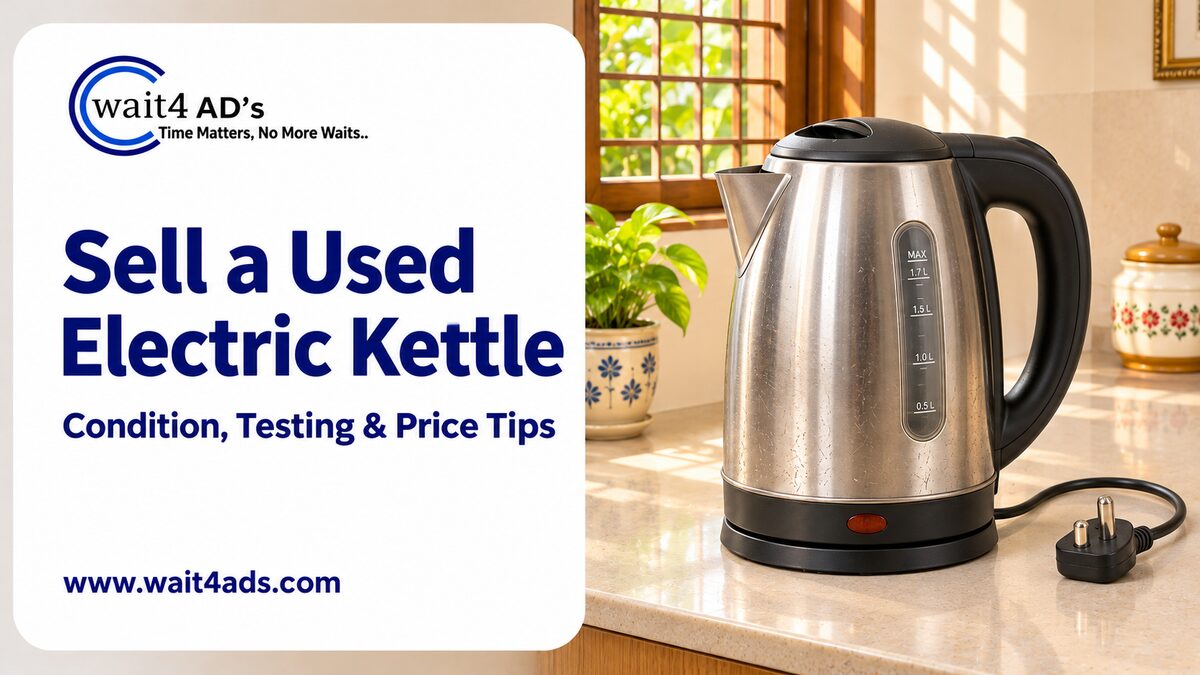
A used electric kettle is easier to compare when the listing identifies its model, shows its condition and says what you were able to test. Use details from the product label or manual, take current photos and be clear about any fault. A realistic description helps buyers decide whether the kettle suits their needs before arranging pickup.
1. Identify the kettle and its specifications
Check the label for the brand, model, stated capacity and wattage. Mention the material only when it is clear from the product or manual, and do not guess the purchase year or original price. State whether the power base, cord, removable filter, manual or box is included. If the label is unreadable, say that instead of estimating the specifications.
2. Test its basic functions safely
Do not plug in a kettle with a damaged cord, plug, base or housing. If it appears intact, follow the manufacturer’s instructions for a supervised check: make sure the lid closes, the switch works and the kettle heats and switches off as expected. Never run it empty, leave it unattended or open the electrical base. If you cannot safely test it, describe it as untested and explain why.
3. Clean it and disclose wear
Unplug the kettle and let it cool before cleaning. Follow the manual for removing mineral scale and rinse it thoroughly; do not immerse the base or electrical parts. Describe stains, scale, scratches, a loose lid, a damaged handle or a missing filter honestly. Mention any repair or intermittent issue you know about. A clear note about a flaw is more useful than a broad claim that the kettle is “like new.”
4. Take photos that answer buyer questions
Use daylight and photograph the kettle from the front, both sides and above. Add close views of the model label, water-level markings, lid, spout, inside, power base and plug. Photograph included accessories separately and show any wear or damage. Keep the counter uncluttered and do not include receipts, personal documents or other private details in the frame.
5. Set a fair local asking price
Compare listings for the same model or a similar kettle in your area. Consider its age if known, capacity, material, working condition, visible wear and included accessories. A new retail price is not a resale estimate. If the model or age is unknown, account for that uncertainty. State whether your price is fixed or negotiable and whether the buyer must collect it.
6. Write a clear listing and arrange handover
Put the brand and model first, then summarize the test and condition. For example: “Electric kettle, [brand/model], [capacity] as marked, heating and auto-off checked on [date], filter included, light marks shown in photos. Pickup from [area].” Replace each bracket with details you can verify. Let the buyer inspect the kettle before handover. Never share an OTP, UPI PIN, password or card details to receive payment, and avoid payment links sent by strangers.
Frequently asked questions
Can I sell a kettle without its original box?
Yes. Say that the box is not included and list any other accessories or paperwork you do have.
What if the kettle heats but the auto-off has not been tested?
State exactly what you checked and what remains untested. Do not claim that the auto-off works unless you verified it safely according to the manual.
Should I remove mineral scale before taking photos?
You can clean it according to the manufacturer’s instructions, but disclose any remaining scale, staining or damage. Do not hide a defect with an edited image.
Ready to list your used kettle?
Gather the model details, confirm what you can test safely and take honest photos before setting a price. You can browse Kitchen & Other Appliances on Wait4Ads, or read the used microwave selling guide for another small-appliance listing example.
Table of Contents
Powered by Froala Editor