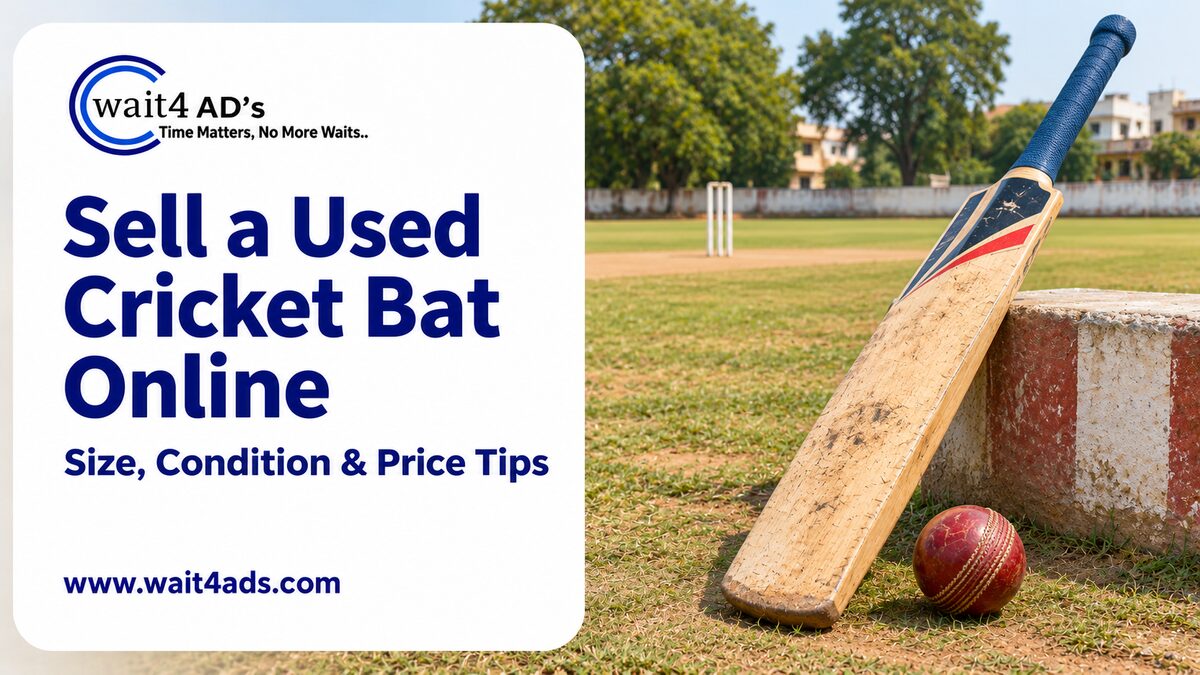
A used cricket bat listing should help a player judge its size, condition, grip and any repairs before arranging a pickup. These steps make the listing more informative without overstating how the bat will perform.
1. Identify the bat and its size
Check the brand, model and any size or weight marking on the bat or its original paperwork. If you measure its length or weight yourself, state that it is your measurement and describe the method. Do not guess the willow type, grade or playing level from appearance alone. Mention whether the bat is sold with a cover, grip or other accessory.
Explain what type of ball it was mainly used with if you know, and give an honest estimate of how long you have owned it.
2. Inspect the face, edges and handle
Look over the face and back for cracks, dents, deep marks, peeling, repairs or other damage. Check the edges, toe, handle, splice and grip for looseness or wear. Describe any knocking-in, oiling, repairs or replacement grip only if you know that work was done. If you see a crack or repair, show it clearly and avoid calling the bat match-ready or as good as new.
3. Take photos buyers can compare
Use daylight and photograph the full front and back, both edges, toe, handle and brand/size labels. Include close-ups of scratches, cracks or repairs. Place the cover or accessories beside the bat if they are included, and keep the background simple so the bat’s condition is easy to see.
4. Set a sensible asking price
Compare listings for the same brand, model and size, then adjust for use, damage, repairs, grip condition and included accessories. A premium new price does not guarantee the same resale value for a used bat. Leave room for reasonable discussion and be clear about whether the listed price includes the cover or other extras.
5. Write a complete description
Include the brand/model, size or measurements, approximate age, main ball type used, condition, repairs and included accessories. Separate what you have tested or personally observed from anything you cannot verify. If you are unsure whether a crack affects play, disclose it and let the buyer inspect the bat or ask a coach to assess it.
6. Arrange inspection and pickup
Agree on a convenient local pickup and let the buyer inspect the face, edges and handle. Protect the bat during transport so it is not knocked against hard items. Confirm payment in your account before handing it over, and never share an OTP, UPI PIN or password to receive money.
Frequently asked questions
Should I list the bat’s weight?
Yes, if it is marked on the bat or you can measure it accurately. Say how you obtained the measurement, and do not estimate from feel alone.
Can I sell a bat with a crack?
You can describe its condition accurately, show the crack and disclose any repair. Do not hide the damage or claim the bat is ready for play if you cannot support that.
Do I need to include the bat cover?
No, but state clearly whether the cover is included and show it in the photos if it is part of the sale.
Clear details about size, use and wear help buyers decide whether a used cricket bat is right for them.
Powered by Froala Editor