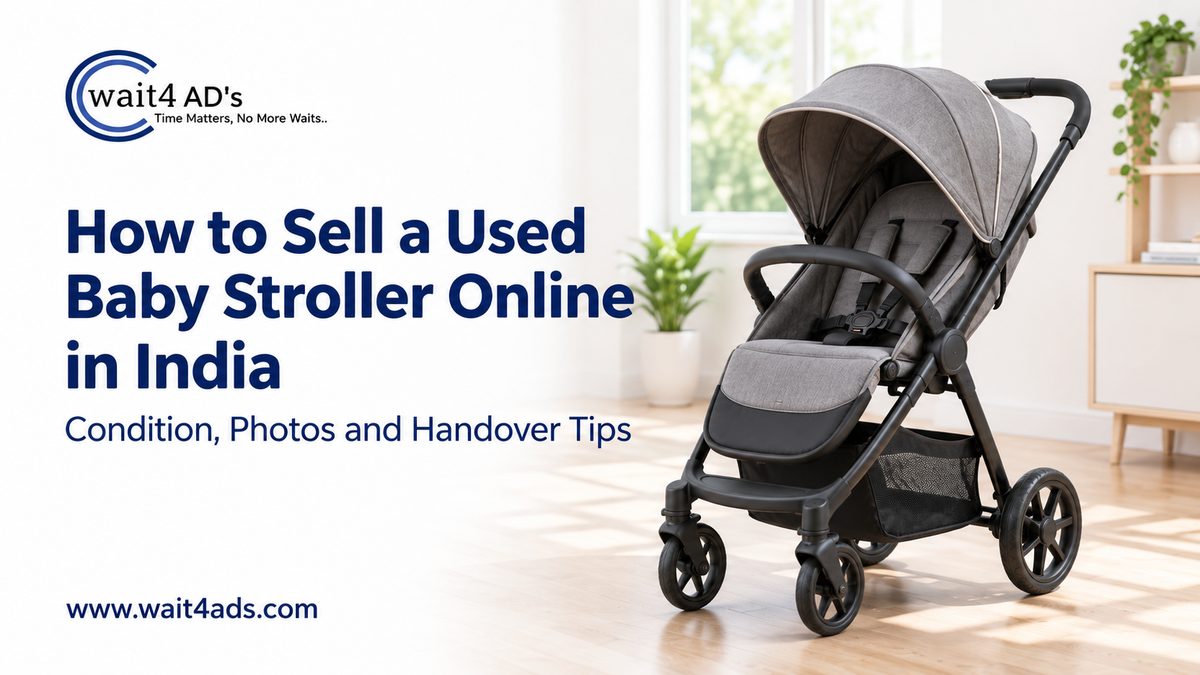
A used stroller listing should help parents assess its model, age, condition and included accessories before arranging a visit. Show the safety-critical parts clearly, disclose any damage or repairs, and avoid claims you cannot verify.
1. Inspect the frame, harness and brakes
Find the make, model and manufacture date on the product label. Check the frame, folding locks, wheels, brakes, seat, harness straps and buckles for cracks, looseness, fraying, rust or missing pieces. Confirm that the stroller folds and locks as designed, wheels roll and brakes engage. Check the model against manufacturer safety notices or recall information where available. Do not offer a damaged or recalled stroller as safe for use; disclose its status and follow the manufacturer’s guidance.
2. Set a fair price for its age and condition
Compare the same model and configuration locally, then account for age, use, wear, accessories and whether the manual or original parts are present. A well-maintained stroller with complete accessories and a clear model history is easier for buyers to evaluate. Reduce the price for visible wear, missing parts or limited documentation. Decide your minimum before negotiation and do not imply a warranty that has expired.
3. Write a complete description
Include brand, model, approximate purchase year, weight or size if known, folding style and included accessories such as rain cover, storage basket or infant insert. State whether it is a single or double stroller and describe the seat and recline options only if known. Mention stains, scratches, repairs, missing pieces, recalled status if applicable, and your pickup locality. Avoid safety or age suitability promises unless supported by the product guidance.
4. Photograph safety details clearly
Take full front, side and folded photos, plus close-ups of the label, frame joints, wheel locks, brakes, harness buckles and included accessories. Show any defect with a clear photo rather than hiding it. Use a tidy, bright space, keep the child out of photos, and do not use filters that alter the true condition. A short video of the folding mechanism can help, but only demonstrate normal operation as directed by the manufacturer.
5. Arrange inspection and handover
Let the buyer inspect the stroller, fold it and check the brakes and harness before completing the sale. Bring the manual if you have it and hand over all listed accessories. Agree on a convenient pickup time and how it will be transported. Do not make modifications or attempt repairs to safety components; if a critical part is damaged or uncertain, do not present the stroller as ready for use.
6. Keep the transaction safe
Keep communication on the platform and avoid sending identity documents or unnecessary personal details. Never share an OTP, UPI PIN, password or screen-sharing access to receive payment. Confirm the money in your own account before handing over the stroller. Do not follow QR codes or links that ask you to enter a PIN or pay a release fee.
7. Post and keep details current
Use a suitable kids or household category and put the brand, model, condition, price and pickup area in the opening lines. Respond to questions with precise information and update availability or accessories as they change. Mark the listing sold after handover.
Frequently asked questions
Should I sell a stroller if I cannot find its manual?
You may list it, but provide the exact model and do not guess about setup or age suitability. Buyers can consult the manufacturer’s instructions.
What if a buckle or brake is not working?
Disclose the fault and do not describe the stroller as ready or safe to use. Do not attempt an unqualified repair of safety components.
Should I include accessories in the price?
State clearly which accessories are included and photograph them so buyers understand what comes with the stroller.
Have a stroller to sell? Share the model, condition, safety checks and included accessories so parents can make an informed choice.
Post a Free Ad
Table of Contents
Related Reading
Powered by Froala Editor