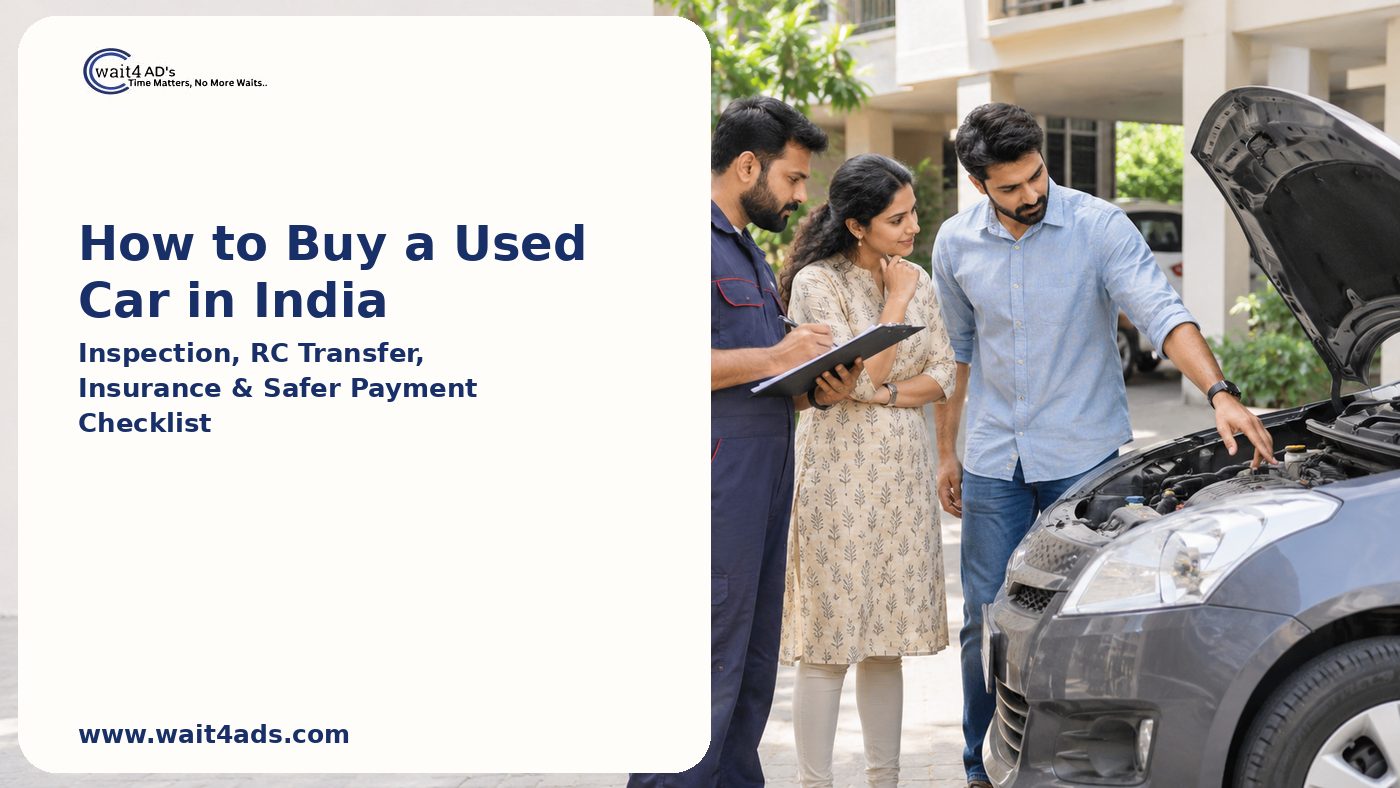
Buying a used car in India can make sense when you want more choice for your budget, but a clean photograph and a confident seller are not enough to judge a vehicle. Before you pay, check the car, its documents, the seller’s authority to transfer it, and the steps needed to update the registration and insurance records. This practical used car buying guide covers the inspection, test drive, RC transfer, payment and pickup checks to complete before you take the keys.
1. Set your budget and shortlist for your use
Start with the total cost you can comfortably afford, rather than the asking price alone. Keep room for a pre-purchase inspection, transfer fees, insurance, immediate repairs, tyres, servicing and any accessories you genuinely need. If you are considering a loan, compare the complete repayment terms separately and make sure the monthly payment fits your household budget.
Think about how you will use the car: daily city travel, highway trips, family use, or occasional errands. Check seating, boot space, ground clearance, parking space and fuel availability where you live. A familiar model with accessible service support and parts may be easier to maintain, but compare the specific car’s condition and records rather than relying only on its brand or fuel type.
2. Check the seller and vehicle records
Ask to see the original Registration Certificate (RC) or its valid digital equivalent and compare the registered owner’s name with the seller’s identity. If the seller is acting for someone else, confirm the authority to sell and complete the transfer. Match the registration number and the chassis and engine identification details on the vehicle with the documents. Do not proceed if details appear altered, inconsistent or difficult to verify.
Review the registration, make, model, fuel type, year, colour and ownership history shown in the RC. Ask whether the car has outstanding finance or a hypothecation entry. If a loan was taken, request the lender’s release and the required record update before treating the title as clear. Check for applicable tax, permit or fitness requirements for the vehicle type and location, and review e-challans or other pending dues using official channels.
Ask for the insurance policy, Pollution Under Control (PUC) certificate where applicable, service invoices, repair bills, warranty documents and both sets of keys if available. Paperwork and requirements can vary by vehicle and state, so use the official Parivahan ownership-transfer guidance and confirm case-specific requirements with the registering authority.
3. Inspect the used car in daylight
Arrange to see the car in daylight on a level surface. Look around the body for uneven panel gaps, paint that differs between panels, rust, dents, cracks in the glass and signs of water entry. Open and close every door, boot and bonnet. Check the tyres for uneven wear and compare their condition, including the spare tyre if one is supplied. Uneven wear can be a reason to ask a mechanic to examine alignment or suspension; it does not by itself identify a particular fault.
Check the cabin for damp smells, water marks, damaged seat belts, warning lights and missing trim. Test the headlights, indicators, horn, wipers, power windows, locks, air conditioning, infotainment and other fitted controls. Ask to see the car start from cold if practical. Watch for warning lights that stay on, unusual smoke, fluid leaks or noises, and have a qualified mechanic assess anything you cannot confidently evaluate.
Consider an independent pre-purchase inspection, especially if you do not know cars well or the vehicle is expensive. Ask the mechanic to inspect the structure, engine, gearbox, brakes, suspension, electrical systems and evidence of accident or flood repairs. An inspection reduces uncertainty but cannot guarantee that a used vehicle will have no future problems.
4. Take a proper test drive
With the owner’s permission and valid documents, take a drive that includes the kind of roads you will use. Adjust the seat and mirrors first. Check that the car starts, accelerates, steers and brakes predictably. Listen for unusual sounds over bumps and during turns. Test the clutch and gear changes on a manual car, or the transmission response on an automatic, without forcing the vehicle. Confirm that the temperature gauge and warning indicators behave normally.
Try parking and reversing, and pay attention to visibility, steering effort, vibration and braking. Do not take a vehicle onto public roads unless the driver is properly licensed and the required documents and insurance are in order. If a test drive is refused, ask why and arrange another safe way to have the car inspected before making a decision.
5. Compare the asking price fairly
Compare similar cars by model, variant, registration year, kilometres, ownership history, location and condition. An advertised price is an asking price, not proof of the car’s value. Factor in tyres, service due dates, repairs identified by your mechanic and any missing accessories. Ask the seller to explain how the price was set and which items are included. Keep negotiations factual and put the final agreed amount and payment schedule in writing.
Be cautious if a price is unusually low, the seller pressures you to pay immediately, or the story changes between messages and the in-person meeting. Do not send a deposit merely to “reserve” a car before verifying the seller, documents and vehicle. Avoid sharing OTPs, banking PINs or passwords. A buyer or seller does not need those secrets to complete a normal vehicle sale.
6. Complete the RC transfer and insurance steps
Changing hands physically does not by itself mean the registration record has been updated. The seller and buyer should complete the required ownership-transfer process for their case through the relevant VAHAN/Parivahan service or registering authority. Official guidance generally refers to Forms 29 and 30 for a normal sale, but the exact documents, sequence, fees and additional approvals can depend on the vehicle, financing status and whether it is moving between states. Check the current official instructions before submission and keep acknowledgement and application details.
Follow up until the RC records show the new owner. If the vehicle is registered in another state, or has an active loan/hypothecation entry, confirm whether an NOC, financier release or other step is required. Ask the insurer how to update or obtain a policy in the buyer’s name and confirm what cover applies during the transition. Do not assume that a policy document bearing the previous owner’s name has been fully transferred. Keep the insurer’s written confirmation and the updated documents.
7. Pay safely and document the handover
Use a traceable payment method and pay the verified owner or authorised seller named in the sale documents. Confirm the recipient’s name and account details independently before a bank transfer. For a large amount, agree in writing when each payment is due and what documents or transfer steps it corresponds to. Get a signed receipt or sale agreement recording the buyer and seller, vehicle registration, amount, date and time of handover, odometer reading and items delivered. Keep copies of messages, payment proof and signed forms.
At handover, collect the keys, original documents that should be transferred, service records and any manuals or accessories agreed in writing. Record the condition and fuel level if it matters to your agreement. Make sure the seller submits their part of the ownership notification and the buyer follows through on the transfer. Keep the paperwork until the new RC and insurance records are confirmed.
Quick used-car buyer checklist
- Seller identity and authority match the ownership records.
- Vehicle identification numbers match the RC and the car.
- Finance, hypothecation, challans and state-specific dues are checked.
- Independent inspection and a permitted test drive are complete.
- Price, payment timing, sale receipt and handover items are written down.
- Ownership transfer and insurance updates are submitted and tracked.
Frequently asked questions
What documents should I check before buying a used car in India?
Start with the RC, seller identity and authority, insurance, applicable PUC, service and repair records, and any finance or hypothecation release. The exact checklist depends on the car and location, so confirm current requirements with the official registering authority.
Can I buy a used car if the RC transfer is still pending?
Do not treat the handover as the end of the process. Agree clearly who will submit each required step, retain signed proof and application acknowledgements, and follow up until the official registration record is updated. If there is a complication, resolve it with the RTO or official portal before proceeding.
Is a mechanic’s inspection necessary?
It is a useful safeguard if you are not qualified to assess a vehicle yourself. A mechanic can identify issues that are difficult to see during a short viewing, though no inspection can promise that a used car will never need repairs.
How do I find used cars near me?
Browse local car listings on Wait4Ads, compare the details and contact sellers to arrange a safe inspection. You can also post a free advertisement if you are selling a car.
For related reading, see our guides to comparing car insurance cover, understanding home-loan costs and checking property documents. Visit Wait4Ads to browse more local listings.
Official reference: Ministry of Road Transport and Highways / Parivahan: Transfer of Ownership.
This guide is general information, not legal or mechanical advice. Requirements differ by vehicle and state and may change. Verify the current process with the official transport authority, insurer and an independent mechanic before you commit to a purchase.
Powered by Froala Editor