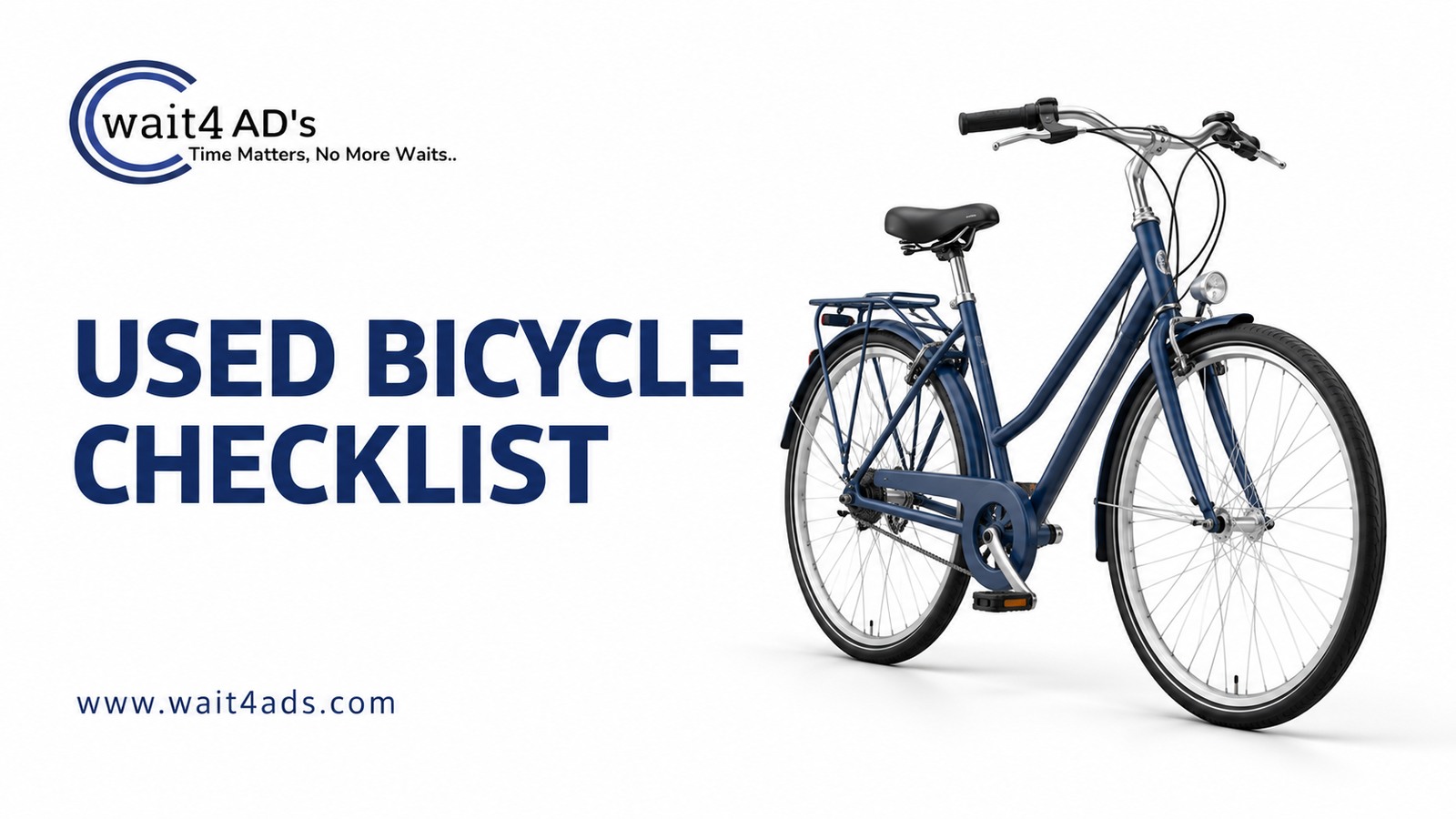
A used bicycle is only a useful purchase if it fits the rider and is in suitable working condition. A recognised brand or a shiny frame cannot answer either question. Start with your intended journeys, then assess the specific bicycle rather than buying from a photograph alone. This checklist focuses on ordinary pedal bicycles; electric bicycles need additional battery, charger and electrical-system checks.
Explore Bicycles listings on Wait4Ads and use the checklist below when preparing an advert or discussing an item.
1. Start with fit and everyday use
Decide whether you need a bicycle for short neighbourhood trips, a daily commute or recreational rides. Consider road surfaces, storage space and whether you must carry it upstairs. Extra gears and suspension are not automatically advantages if they add maintenance you do not need.
Ask for the exact model, frame size and wheel size before travelling. Check the manufacturer’s sizing guidance, then assess the actual fit in person. Wheel size alone does not establish whether the frame fits. You should be able to reach the controls comfortably and use the bicycle confidently; ask a bicycle shop for help if you are unsure.
2. Ask about ownership and repairs
Request recent photographs of both sides, the drivetrain, tyres and any damaged areas. Ask when the bicycle was bought, why it is being sold, whether it has crashed and which parts have been replaced. Ask for an invoice or other ownership information where available.
- Has it been stored outdoors or unused for a long period?
- Do both brakes operate correctly?
- Does it shift through its gears without skipping?
- Are any components loose or due for replacement?
- Which accessories are included in the asking price?
An absent invoice does not prove wrongdoing, but unclear ownership, an altered frame number or inconsistent answers are reasons to stop and investigate before paying.
3. Inspect before considering a ride
Look for visible cracks, dents, heavy corrosion and suspicious repairs on the frame and fork. Check tyres for visible damage and examine wheels, controls and the chain. Ask a competent bicycle mechanic to assess concerns instead of assuming a cheap adjustment will fix them.
Check that the brakes work and that the wheels and saddle are secure before any ride. Trek’s pre-ride checklist provides a useful manufacturer reference. A visual inspection cannot establish the condition of every component, particularly after a crash.
If the bicycle appears unsafe, do not test-ride it. Agree to meet at a bicycle shop for an inspection instead. Do not dismantle components or make unfamiliar adjustments at a seller’s home.
4. Agree on a short, controlled test ride
Obtain the seller’s permission and agree on the route before riding. Use a suitable helmet and a quiet area away from traffic. Begin slowly, checking steering and braking, then try the gears if the bicycle has them. Stop if anything slips, grinds, feels loose or behaves unpredictably.
Pay attention to comfort as well as mechanical behaviour. A bicycle that forces an uncomfortable reach may be a poor choice even if everything works. Do not leave sensitive original documents with an unknown seller as informal security for a test ride.
5. Compare the complete purchase cost
Ask a shop for an estimate for any required work. Include tyres, brake servicing, drivetrain work, transport and essential accessories in your budget. Compare that total with other suitable bicycles, including new alternatives.
Use like-for-like comparisons: similar type, size, age and condition. An advertisement shows an asking price, not a confirmed sale value. A seller’s original purchase price also does not establish today’s value.
Record the agreed price, included accessories, known defects and collection arrangements. Keep a written purchase record with the bicycle details and frame number where available.
6. Selling your bicycle? Make inspection easier
Photograph the complete bicycle and its actual condition. State the frame size, wheel size, model, gear arrangement, known faults and recent work. Describe included accessories separately. Offer a sensible inspection arrangement without promising that the bicycle is fault-free unless you can support that claim.
A useful title might be “Used Hybrid Bicycle, Medium Frame, Collection in Jaipur”. Use only details that match your bicycle. Mark the listing unavailable once it has sold so another buyer does not plan an unnecessary visit.
Frequently Asked Questions
Is frame size more important than wheel size?
Both describe the bicycle, but wheel size alone cannot confirm rider fit. Check the exact model’s sizing guidance and assess comfort in person.
Should I buy a bicycle that needs servicing?
Only after understanding the work and likely cost. Arrange a mechanic’s assessment for uncertain damage or safety concerns.
Does a short ride prove the bicycle has no faults?
No. It can reveal obvious problems but cannot replace a professional inspection or establish every component’s condition.
Take the Next Step
For help organising your description, read our guide to writing a classified ad that gets responses. Use accurate details, current photographs and clear arrangements.
Table of Contents
Related Reading
Powered by Froala Editor